If you are starting finasteride for hair loss, you may have heard about “shedding”.
You may even notice that after starting finasteride, you experience increased hair shedding during the first few months of treatment compared with before you began.
In most cases, this is not a sign of failure. Finasteride-related shedding is a normal and temporary part of the hair-growth cycle as weaker hairs are pushed out to make way for healthier regrowth.
Knowing why shedding happens, when to expect it, and how to manage it can help you stay confident with treatment – giving your hair the best possible chance to grow back stronger, thicker, and more resilient over time.
Finasteride shedding is a temporary increase in hair loss that some people notice after starting treatment.
This early change can be surprising, but it’s usually temporary and resolves on its own.
Finasteride lowers levels of DHT, the hormone that causes hair follicles to shrink over time.
When DHT is reduced, weaker hairs that were already close to falling out are pushed out quicker.
This clears the way for new, healthier hairs to grow in their place.
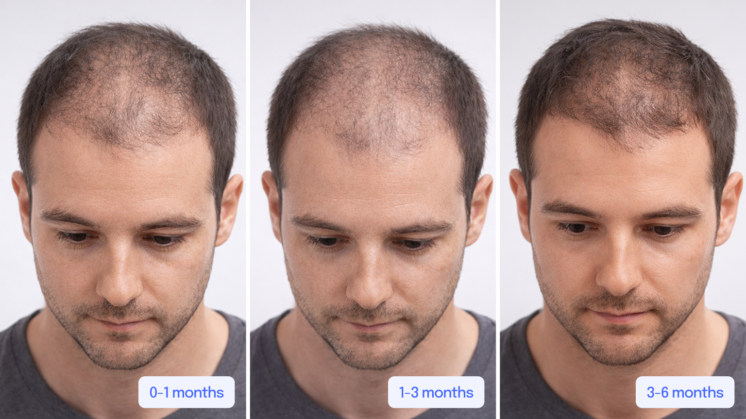
Shedding usually starts within the first 1 to 3 months of treatment.
Not everyone experiences it, but for those who do, it’s often one of the earliest signs that the hair growth cycle is resetting.
It tends to last a few weeks to a few months, before it slows down and eventually stops.
Hair growth is a slow process, so visible improvements typically take several more months after shedding stops.
Finasteride shedding occurs because the medication alters the hair-growth cycle in a way that temporarily pushes out weaker hairs to make room for stronger ones.
Here is what is happening biologically:
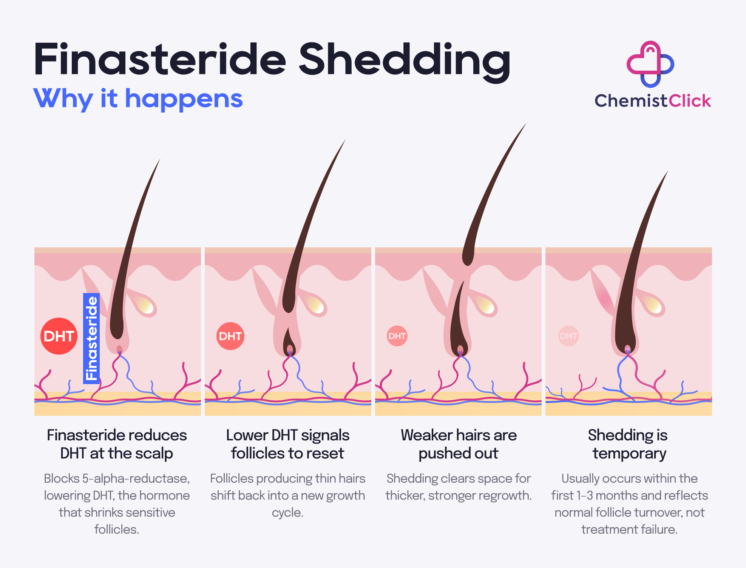
Finasteride blocks 5-alpha-reductase, the enzyme that converts testosterone into dihydrotestosterone (DHT).
DHT is the hormone responsible for shrinking genetically sensitive hair follicles in male-pattern hair loss.
When DHT levels fall, follicles that were producing thin, weak hairs are signalled to reset.
These fragile hairs are shed so the follicle can begin a healthier growth cycle.
After shedding, the follicles start producing thicker, stronger hairs with a longer growth phase. This is the therapeutic effect of finasteride.
Shedding typically occurs within the first 1–3 months and reflects follicular “turnover,” not treatment failure. Hair density usually stabilises and improves over subsequent months.
In short: finasteride does not cause hair loss, it accelerates the replacement of weak, DHT-affected hairs with healthier regrowth. Temporary shedding is often a sign that the medication is working at the follicular level.
| When | What you may notice | What it means |
|---|---|---|
| First few weeks | Little or no change in hair shedding | Finasteride is starting to work at a hormonal level, but visible hair changes take time. |
| 1–3 months | Increased hair shedding when washing, brushing, or on pillows | Weaker hairs are being pushed out to make room for healthier, thicker hairs. This is common and expected. |
| 3–6 months | Shedding slows down or returns to normal | Hair follicles are adjusting, and the shedding phase is usually coming to an end. |
| 6–12 months | Hair looks thicker or fuller, with less ongoing loss | Finasteride’s benefits become more noticeable as new hairs grow and existing hairs are maintained. |
| Beyond 12 months | Continued stabilisation of hair loss | Ongoing treatment helps protect existing hair and maintain results. |
Not everyone experiences finasteride shedding, and the amount can vary from person to person.
If shedding feels severe, lasts longer than expected, or causes concern, it’s always best to speak with a pharmacist or prescriber for advice.
Finasteride works best when taken daily and without interruption. Skipping doses or stopping finasteride can reduce its effectiveness and delay hair regrowth.
Shedding typically lasts a few weeks to a few months, and new, stronger hairs may not appear immediately. Keep realistic expectations and give your follicles time to adjust.
Further reading: Does Finasteride work?
Gentle hair care can help minimise breakage and hair stress:
Avoid harsh brushing or heat styling
Limit chemical treatments when possible
Taking photos every few months can help you see gradual improvements that aren’t obvious day-to-day.
If shedding continues beyond a few months, worsens unexpectedly, or comes with other concerning symptoms, speak to your clinician. They can check your dosage, rule out other causes, and give guidance on next steps.
Seeing more hair fall out when you first start finasteride can be worrying, but it is usually a good sign, not a bad one.
The medication helps your scalp clear out weaker hairs so stronger, healthier hair can grow in their place. This shedding is temporary and normally settles within the first few months.
Sticking with treatment gives your hair the best chance to look thicker and fuller over time.
Yes, some people experience temporary shedding when they start finasteride. This usually happens in the first 1–3 months as weaker hairs fall out to make way for stronger, healthier hair. It’s generally a normal part of the treatment process and not a sign of permanent hair loss.
Finasteride shedding typically lasts a few weeks to a few months. For most people, it gradually slows down as weaker hairs are replaced. Visible improvements in hair growth usually appear several months after the shedding phase ends.
It tends to start within the first 1 to 3 months. The timing can vary between individuals, and not everyone experiences it. It’s generally a short-term phase as hair follicles adjust and prepare for stronger regrowth.
Some people may notice temporary shedding in the first few weeks or months of treatment. This “finasteride shedding” is usually normal and a sign that the medication is working to replace weaker hairs with stronger ones.
Whilst all of our content is written and reviewed by healthcare professionals, it is not intended to be substituted for or used as medical advice. If you have any questions or concerns about your health, please speak to your doctor.
This guide explains how to reduce common finasteride side effects, what to expect when starting treatment, and when to seek advice. It offers practical guidance to help you use finasteride safely and confidently.
Read the article