Wegovy tablets are now MHRA-approved in the UK as a prescription-only medicine for weight loss and weight management in eligible adults. They contain semaglutide, the same active ingredient used in Wegovy injections.

Like the injection, Wegovy tablets work by reducing appetite, increasing fullness and slowing how quickly the stomach empties. These effects help with weight loss, but they can also cause digestive side effects, especially in the early stages of treatment.

What are the most common side effects of Wegovy tablets?

Wegovy tablets side effects

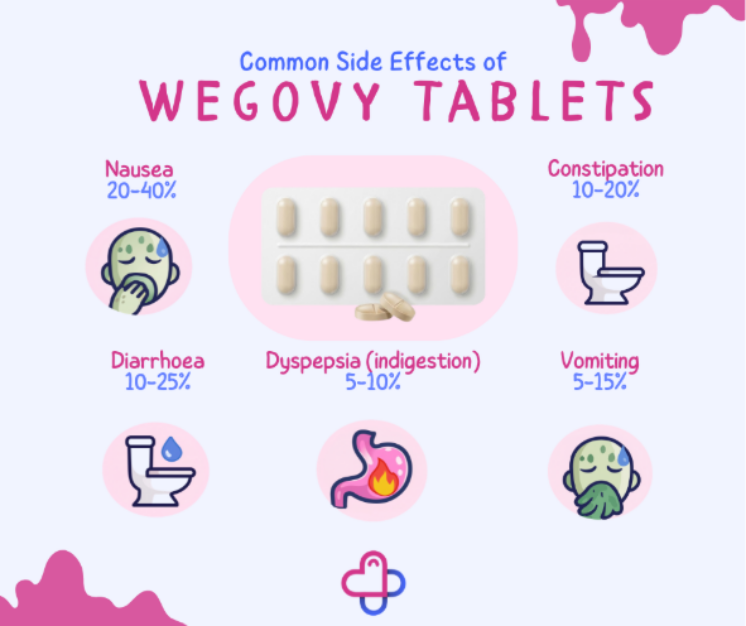
The most common side effects of Wegovy tablets are gastrointestinal, meaning they affect the stomach and digestive system.

These include:

  • nausea
  • vomiting
  • diarrhoea
  • constipation
  • stomach pain
  • bloating
  • indigestion
  • acid reflux
  • burping
  • reduced appetite
  • fatigue
  • headache
  • dizziness

Most side effects are mild to moderate and tend to happen when the dose is being increased. They often settle once your body gets used to the medicine.

Wegovy tablet side effects at a glance

Side effect How common in oral semaglutide 25mg trials What it may feel like
Nausea 46.6% Feeling sick, especially after eating
Vomiting 30.9% Being sick, usually worse after larger meals
Constipation 20.1% Passing stools less often or straining
Diarrhoea 17.6% Loose or frequent stools
Indigestion or reflux Common Burning, burping or discomfort after food
Bloating Common Fullness, trapped wind or abdominal pressure
Stomach pain Common Cramping or abdominal discomfort
Headache Common Head pain or pressure, sometimes linked to eating less
Fatigue Common Feeling tired or low in energy
Dizziness Common Light-headedness, especially if eating or drinking less

Source: Oral Semaglutide at a Dose of 25 mg in Adults with Overweight or Obesity

In the OASIS 4 trial, gastrointestinal side effects were reported in 74.0% of people taking oral semaglutide 25mg, compared with 42.2% of people taking placebo.

Why do Wegovy tablets cause side effects?

Wegovy tablets contain semaglutide, a GLP-1 receptor agonist. GLP-1 medicines help reduce appetite and make you feel fuller for longer.

They can also slow stomach emptying. This is one reason why people may feel sick, bloated, full quickly, or uncomfortable after eating larger meals.

Side effects are more likely if you:

  • eat large meals
  • eat quickly
  • eat greasy, rich or spicy foods
  • drink alcohol
  • do not drink enough fluids
  • increase the dose before your body has adjusted
  • take the tablet incorrectly

How to manage Wegovy tablet side effects

Side effect How to manage it
Nausea Eat smaller meals, eat slowly, avoid greasy foods and stop eating when you feel full
Vomiting Sip water regularly and avoid large meals; seek advice if vomiting continues
Diarrhoea Drink plenty of fluids and consider oral rehydration salts if needed
Constipation Increase fluids, fibre and gentle movement; speak to a pharmacist if it persists
Bloating Eat smaller portions and avoid fizzy drinks, chewing gum and very rich meals
Indigestion or reflux Avoid large evening meals, fatty foods, alcohol and lying down soon after eating
Headache Check hydration and food intake; symptoms may be worse if you are eating much less
Dizziness Drink fluids, avoid standing too quickly and do not drive if affected
Fatigue Make sure you are eating enough protein and drinking enough fluids

If side effects are severe, persistent or worsening, speak to your prescriber. Do not increase your dose until you have received clinical advice.

When do Wegovy tablet side effects start?

Side effects can start within the first few days of taking Wegovy tablets, but they are most common when treatment begins or when the dose is increased.

Wegovy tablets are usually started at a low dose and increased gradually. This helps your body adjust and reduces the chance of severe side effects.

Further reading: Wegovy tablets dosage

How long do Wegovy tablet side effects last?

For many people, side effects improve within a few days to a few weeks. Nausea, bloating and indigestion often settle once the body adapts to the dose.

Some side effects, such as constipation, may last longer and may need lifestyle changes or pharmacy advice.

If side effects do not improve, become severe, or stop you eating and drinking normally, you should contact your prescriber.

Are Wegovy tablet side effects different from injections?

Wegovy tablets and injections contain the same active ingredient, semaglutide, so their side effects are broadly similar.

The main difference is how the medicine is taken.

Wegovy tablets are taken once daily on an empty stomach with a small amount of water. You must wait at least 30 minutes before eating, drinking anything else, or taking other medicines.

Wegovy injections are taken once weekly and do not have the same fasting rule.

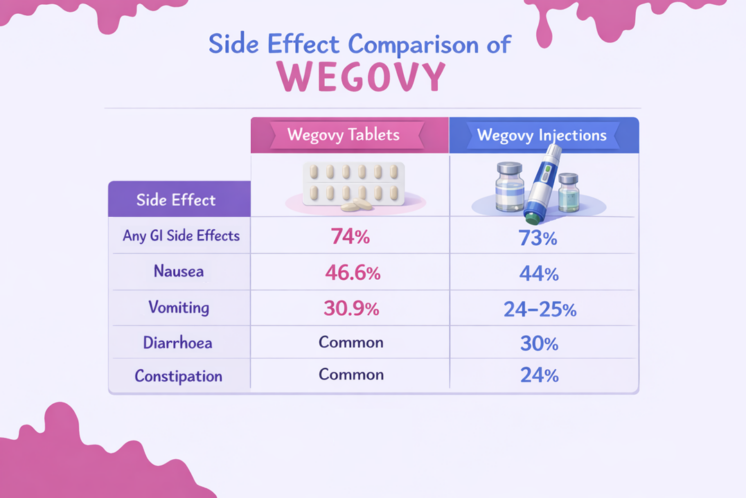
Side effect comparison Wegovy tablets Wegovy injections
Active ingredient Semaglutide Semaglutide
Main side effects Digestive symptoms Digestive symptoms
Nausea Common Common
Vomiting Common Common
Diarrhoea Common Common
Constipation Common Common
Injection-site reactions No Possible
Fasting rule Yes No
Dose timing issues More important Less strict

Wegovy tablets are not necessarily gentler than injections.

Some people may prefer tablets because they avoid needles, but others may find injections easier because they are weekly and do not require a strict morning routine.

Further reading: Wegovy tablets vs injections

a table comparing the side effects of wegovy tablets vs injections
side effects of Wegovy tablets vs injections

Very common Wegovy tablet side effects

Very common side effects affect more than 1 in 10 people.

These may include:

  • nausea
  • vomiting
  • diarrhoea
  • constipation
  • stomach pain
  • headache
  • tiredness
  • indigestion
  • acid reflux
  • bloating

These side effects are usually not dangerous, but they can be uncomfortable. They should be monitored, especially if they affect your ability to eat or drink.

Common Wegovy tablet side effects

Common side effects affect up to 1 in 10 people.

These may include:

  • dizziness
  • burping
  • wind
  • reduced appetite
  • gallstone-related symptoms
  • low blood sugar, especially if used with insulin or sulphonylureas
  • changes in taste
  • hair shedding linked to rapid weight loss
  • mild dehydration if vomiting or diarrhoea occurs

Speak to a healthcare professional if these symptoms become troublesome or do not improve.

Serious Wegovy tablet side effects

Serious side effects are less common, but they need urgent medical attention.

Seek urgent help if you develop:

  • severe, persistent stomach pain, especially if it spreads to your back
  • repeated vomiting or diarrhoea
  • signs of dehydration, such as very dark urine, dizziness or confusion
  • swelling of the face, lips, tongue or throat
  • difficulty breathing
  • severe rash or itching
  • yellowing of the skin or eyes
  • sudden vision loss or rapidly worsening eyesight
  • symptoms of low blood sugar if you also take diabetes medicines

Severe, persistent abdominal pain may be a sign of pancreatitis. Sudden vision changes may need urgent eye assessment.

Can Wegovy tablets cause dehydration?

Yes. Vomiting and diarrhoea can lead to dehydration, especially if symptoms continue for more than a short period.

Signs of dehydration include:

  • feeling very thirsty
  • passing little urine
  • dark urine
  • dizziness
  • dry mouth
  • weakness
  • confusion

If you cannot keep fluids down, or you feel faint or very unwell, seek medical advice urgently.

Can Wegovy tablets affect your vision?

Semaglutide has been linked in very rare cases to a serious eye condition called non-arteritic anterior ischaemic optic neuropathy, also known as NAION.

You should seek urgent medical attention if you notice:

  • sudden loss of vision
  • eyesight getting worse very quickly
  • new severe visual disturbance
  • vision changes in one or both eyes

If eye casualty is available in your area, attend urgently. Otherwise, attend A&E.

Can Wegovy tablets cause pancreatitis?

Pancreatitis is a rare but serious possible side effect of GLP-1 medicines.

Seek urgent medical attention if you develop severe, persistent abdominal pain, especially if the pain spreads to your back or is accompanied by nausea and vomiting.

If pancreatitis is confirmed, GLP-1 treatment should not usually be restarted unless advised by a specialist.

Frequently Asked Questions

There is no clear sign that Wegovy tablets cause any new long-term side effects that are different from semaglutide injections. Most of the known side effects are stomach-related, and longer-term data are still building. 

No, so far, Wegovy tablets appear to have a similar side effect profile to the injections, especially for nausea, vomiting, diarrhoea and constipation. 

For most people, side effects are mild to moderate. They are usually worse when starting treatment or increasing the dose, then often improve as your body adjusts. 

Yes, most side effects are noticeable in the early stages of treatment and tend to settle over time. 

Yes, in trials, 46.6% of people reported nausea. 

Yes, in trials17.6% of people reported diarrhoea. 

Yes, in trials 30.9% of people reported vomiting. 

Yes, in trials20.1% of people reported constipation. 

Yes, in trialsabdominal bloating/distension was reported in up to 3%indigestion in up to 3%, and burping in up to 2% of people.  

They can in some people. In oral semaglutide studies, acid reflux / gastro-oesophageal reflux disease was reported in around 2% of patients. 

Yes, this is not a direct result of the medication itself, but caused by a reduced calorie intake which can lower energy levels.  

Yes, the reduced calorie intake is most likely the causative factor.  

Yes, they can indirectly. Vomiting and diarrhoea can lead to dehydration.

Dizziness is a recognised side effect of oral semaglutide. 

It appears to be rare. In the oral semaglutide clinical programme, pancreatitis was reported as a serious adverse event in 6 treated patients. 

Yes, although it appears uncommon. In oral semaglutide trials, gallstones were reported in 1% of patients in placebo-controlled studies. In a longer cardiovascular outcomes trial, gallstones occurred in 1.1% and cholecystitis in 1.1%. 

Sometimes, yes. This should only be done with prescriber advice. In clinical trials, most gastrointestinal side effects were mild to moderate and reduced over time, and 3.4% stopped treatment because of gastrointestinal side effects. 

Sometimes, yes. Your prescriber may advise staying on a lower dose for longer or increasing the dose more slowly if side effects are hard to tolerate. 


Whilst all of our content is written and reviewed by healthcare professionals, it is not intended to be substituted for or used as medical advice. If you have any questions or concerns about your health, please speak to your doctor.

Share