Wegovy tablets, also known as oral semaglutide or GLP-1 tablets, have generated significant interest as a potential new option for weight management, with clinical studies showing average weight loss of up to around 15% of body weight in some patients.  

As a tablet-based alternative to weight loss injections, it could offer a more convenient option for people who prefer not to use injections while still benefiting from GLP-1 based therapy. 

Wegovy tablets help you feel full sooner, stay fuller for longer, and feel less hungry between meals. This can make it easier to eat smaller portions and reduce snacking. They also slow down digestion, which is one reason they help you feel satisfied for longer after eating.

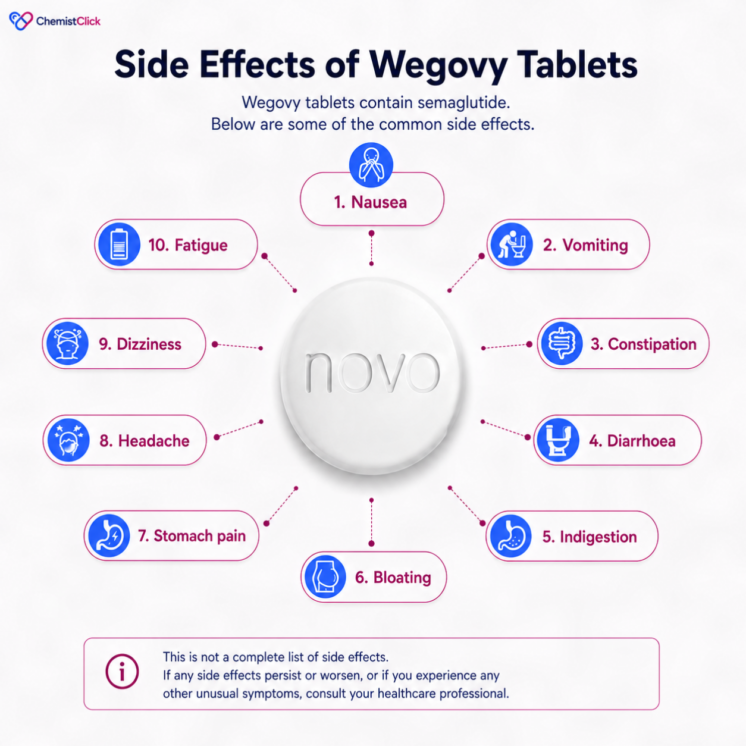
Because of how they work, Wegovy tablets can cause side effects.

Common side effects of Wegovy tablets

Wegovy tablets side effects

Most side effects are mild to moderate and tend to improve as your body adjusts to the medication over time. 

  • Nausea: around 20–40% 
  • Diarrhoea: around 10–25% 
  • Vomiting: around 5–15% 
  • Constipation: around 10–20% 
  • Abdominal (stomach) pain: around 5–10% 
  • Indigestion / bloating: around 5–10% 
  • Reduced appetite: around 15–30% 

Other potential side effects

Alongside the more common digestive symptoms, there are some less frequent side effects to be aware of: 

  • Headache: reported in a small number of people 
  • Dizziness: may occur, especially when starting treatment 
  • Fatigue (tiredness): sometimes linked to reduced calorie intake 
  • Gallbladder issues (including gallstones): uncommon, but risk may increase with rapid weight loss 
  • Hair thinning: reported by some people during weight loss 
  • Low blood sugar (hypoglycaemia): more likely if used alongside other diabetes medications 

These side effects are generally less common, but it’s important to seek advice if anything feels persistent or concerning. 

Why do Wegovy tablets cause side effects?

Side effects mainly happen because of how semaglutide works in the body. It slows digestion and reduces appetite, so your body may need time to adjust when you first start treatment or increase the dose.

Because food stays in the stomach for longer and hunger signals are reduced, some people notice nausea, bloating, or a queasy feeling at first.

During this settling-in period, the digestive system can also become more sensitive, which may lead to diarrhoea, constipation, vomiting, indigestion, or stomach discomfort.

These side effects are usually most noticeable early on and often improve as your body gets used to the medicine.

When do Wegovy tablets side effects start?

Side effects often begin within the first few days or weeks of starting Wegovy tablets, and they are usually most noticeable when treatment is first started or when the dose is increased.

The gradual dose-escalation schedule helps the body, however, gastrointestinal side effects are most frequently reported during dose escalation.

For many people, symptoms such as nausea, bloating, diarrhoea, constipation, or vomiting improve over time as the body gets used to the medicine.

These side effects are commonly mild to moderate and often settle within a few weeks, although the exact timing can vary from person to person.

How long do Wegovy tablets side effects last?

It is not possible to give one exact timeframe that applies to everyone, because studies and prescribing information do not set out a single fixed duration for how long each side effect lasts. What they do show is that, for most people, these side effects are temporary and are most closely linked to starting treatment and increasing the dose.

Trial and prescribing data for semaglutide suggest that gastrointestinal side effects such as nausea, diarrhoea, vomiting, and constipation are usually most noticeable during the early stages of treatment or during dose escalation. Official patient information also states that these side effects usually go away over time.

This means symptoms such as nausea or diarrhoea often improve within days to weeks for many people, but some symptoms can come and go, especially after a dose increase.

Some people may also find that side effects last longer, particularly if they are more sensitive to the medicine or are taking a higher dose. That is why Wegovy tablets are introduced gradually rather than started at a full maintenance dose.

Further reading: Wegovy tablets dosage

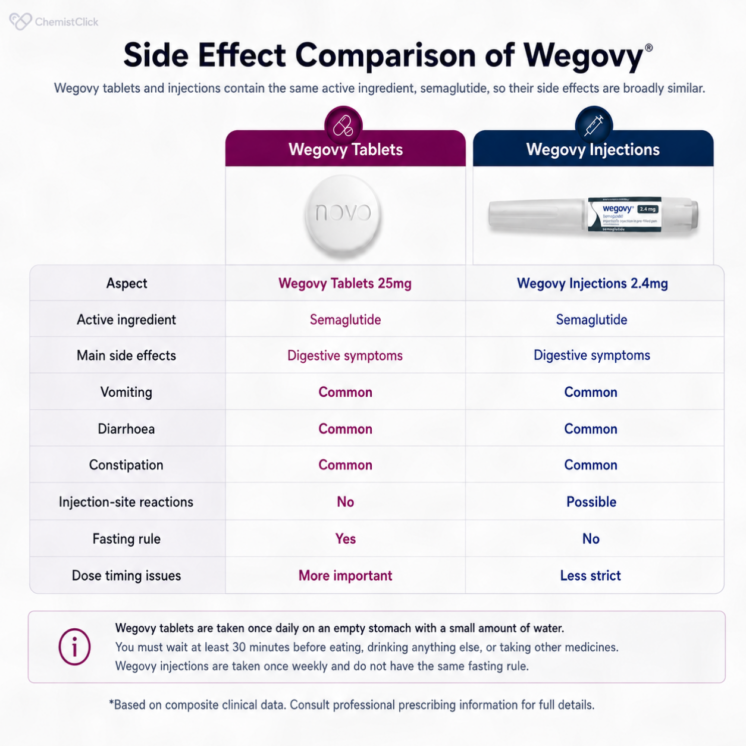
Comparing the side effects of Wegovy tablets vs injections

Many people assume Wegovy tablets will cause fewer side effects than the injection, but the research so far does not clearly show that.

Both forms of semaglutide mainly cause digestive side effects such as nausea, vomiting, diarrhoea, and constipation.

In studies, the overall side-effect pattern with the tablets looked broadly similar to the injection, rather than noticeably milder.

For oral semaglutide, gastrointestinal side effects were reported in 74.0% of people, with nausea in 46.6% and vomiting in 30.9%.

For injectable Wegovy 2.4 mg, gastrointestinal side effects were reported in 73% of adults, with nausea in 44%, diarrhoea in 30%, vomiting in 25%, and constipation in 24%


Side effect comparison 

side effects of Wegovy tablets vs injections

When should you seek medical attention?

Do not ignore symptoms that feel unusual or worrying.

Speak to a clinician if side effects are severe, persistent, or getting worse.

This includes:

  • ongoing vomiting or diarrhoea that could cause dehydration
  • severe stomach pain that does not go away
  • signs of an allergic reaction such as swelling of the face, lips, tongue, or throat, a rash, or difficulty breathing

You should also seek medical advice if you develop symptoms of low blood sugar, such as:

  • dizziness
  • sweating
  • shakiness
  • confusion
  • blurred vision

especially if you take other diabetes medicines.

Most side effects are mild and improve as your body gets used to the treatment

Key considerations

Before starting Wegovy tablets, it helps to know what to expect.

Side effects are most common when you first begin treatment or when your dose is increased.

Most are related to the digestive system, such as nausea, bloating, vomiting, diarrhoea, constipation, or changes in bowel habits.

Clinical trials suggest these side effects are usually mild to moderate and often improve over time as your body adjusts.

Everyone responds differently, so side effects can vary in both duration and intensity.

Frequently Asked Questions

There is no clear sign that Wegovy tablets cause any new long-term side effects that are different from semaglutide injections. Most of the known side effects are stomach-related, and longer-term data are still building. 

No, so far, Wegovy tablets appear to have a similar side effect profile to the injections, especially for nausea, vomiting, diarrhoea and constipation. 

For most people, side effects are mild to moderate. They are usually worse when starting treatment or increasing the dose, then often improve as your body adjusts. 

Yes, most side effects are noticeable in the early stages of treatment and tend to settle over time. 

Yes, in trials, 46.6% of people reported nausea. 

Yes, in trials17.6% of people reported diarrhoea. 

Yes, in trials 30.9% of people reported vomiting. 

Yes, in trials20.1% of people reported constipation. 

Yes, in trialsabdominal bloating/distension was reported in up to 3%indigestion in up to 3%, and burping in up to 2% of people.  

They can in some people. In oral semaglutide studies, acid reflux / gastro-oesophageal reflux disease was reported in around 2% of patients. 

Yes, this is not a direct result of the medication itself, but caused by a reduced calorie intake which can lower energy levels.  

Yes, the reduced calorie intake is most likely the causative factor.  

Yes, they can indirectly. Vomiting and diarrhoea can lead to dehydration.

Dizziness is a recognised side effect of oral semaglutide. 

It appears to be rare. In the oral semaglutide clinical programme, pancreatitis was reported as a serious adverse event in 6 treated patients. 

Yes, although it appears uncommon. In oral semaglutide trials, gallstones were reported in 1% of patients in placebo-controlled studies. In a longer cardiovascular outcomes trial, gallstones occurred in 1.1% and cholecystitis in 1.1%. 

Sometimes, yes. This should only be done with prescriber advice. In clinical trials, most gastrointestinal side effects were mild to moderate and reduced over time, and 3.4% stopped treatment because of gastrointestinal side effects. 

Sometimes, yes. Your prescriber may advise staying on a lower dose for longer or increasing the dose more slowly if side effects are hard to tolerate. 


Whilst all of our content is written and reviewed by healthcare professionals, it is not intended to be substituted for or used as medical advice. If you have any questions or concerns about your health, please speak to your doctor.

Share