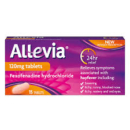
Fexofenadine hydrochloride is a non-drowsy antihistamine used to treat allergy symptoms such as sneezing, a runny nose, itchy eyes, watery eyes and itchy skin rashes. It is commonly used for hay fever and hives, also known as urticaria.
The right fexofenadine dose depends on why you are taking it. For most adults and children aged 12 and over, the usual dose is 120mg once daily for hay fever or 180mg once daily for hives.
You should not take extra tablets or increase your dose unless a doctor or pharmacist has advised you to. NHS guidance states that fexofenadine comes in 30mg, 120mg and 180mg strengths, with 120mg once daily usually used for hay fever and 180mg once daily usually used for hives.
The fexofenadine dosage may be higher than 180mg if you are experiencing serious symptoms. This is usually confined to skin issues, and your doctor may prescribe you with a stronger dose. This makes the dose off-label, and will usually involve a specialist doctor such as a dermatologist. This may involve you having to carry out certain laboratory tests, to confirm your diagnosis.
| Reason for taking fexofenadine | Usual dose | Who this applies to |
|---|---|---|
| Hay fever / seasonal allergic rhinitis | 120mg once daily | Adults and children aged 12 and over |
| Hives / chronic urticaria | 180mg once daily | Adults and children aged 12 and over |
| Children aged 6 to 11 | 30mg twice daily | Usually under age-appropriate guidance |
| Severe urticaria or angioedema | Higher doses may sometimes be prescribed | Doctor or specialist supervision only |
For most people, fexofenadine is taken once a day. If you have bought fexofenadine over the counter from a pharmacy or shop, follow the instructions on the packet. If it has been prescribed, follow the instructions given by your doctor or prescriber.
The usual adult fexofenadine dose depends on the condition being treated.
For hay fever, the usual dose is fexofenadine 120mg once daily. This is commonly used for symptoms such as sneezing, itchy eyes, watery eyes, a runny nose and nasal itching.
For hives, the usual dose is fexofenadine 180mg once daily. Hives usually appear as raised, itchy wheals or patches on the skin. The 180mg strength is licensed for chronic idiopathic urticaria in adults and children aged 12 and over.
You should not take two fexofenadine 180mg tablets unless a doctor has specifically told you to. Two 180mg tablets would equal fexofenadine 360mg daily, which is above the usual licensed once-daily dose.
For most people, the usual maximum dose is:
If your symptoms are not controlled, do not simply double the dose yourself. Speak to a doctor or pharmacist, as you may need a different treatment plan, such as a steroid nasal spray, eye drops, a different antihistamine, or a supervised higher-dose regimen if you have chronic urticaria.
Although taking two tablets (360mg) is unlikely to harm you as a one off, it can be harmful to your health if you do this regularly. It suppresses your immune response, which can be dangerous. Higher doses will only be prescribed with your doctor’s approval, if you have a certain medical condition. You are likely to need regular medical assessments whilst on a higher dose.
It is important to note that you should not self treat, even if your symptoms are severe. This may lead to an overdose. If you are experiencing signs of an allergic reaction, you should seek urgent medical attention.
Fexofenadine 120mg is usually taken once daily for hay fever. Taking fexofenadine 120mg twice a day would give a total daily dose of 240mg, which is above the usual hay fever dose.
You should only take fexofenadine 120mg twice daily if a doctor or prescriber has advised you to. If one 120mg tablet is not controlling your hay fever symptoms, it may be better to review your full allergy treatment rather than increasing the dose yourself.
For example, poorly controlled hay fever may improve with:
The usual maximum licensed dose of fexofenadine is 180mg once daily for hives. For hay fever, the usual dose is 120mg once daily.
However, in some people with chronic urticaria or angioedema, doctors or specialists may prescribe higher doses of non-drowsy antihistamines. This is usually considered when symptoms are not controlled with the standard dose. BSACI guidance notes that the dose of second-generation antihistamines may be increased up to fourfold in chronic spontaneous urticaria to help improve symptom control.
This does not mean you should increase the dose yourself. Higher-dose fexofenadine is usually off-label and should only be used when a doctor has assessed that it is appropriate for you.
Fexofenadine 360mg daily is higher than the usual licensed dose. It may sometimes be used under medical supervision for conditions such as chronic urticaria or angioedema, but it should not be self-started for hay fever.
A doctor may need to consider:
If you have taken more than your usual dose, fexofenadine is generally considered very safe, but NHS advice is to contact 111 if you have taken more than recommended and develop symptoms such as headache, a fast heartbeat or sleepiness, or if you are concerned.
Most people should take one fexofenadine tablet per day.
This usually means:
Do not take two doses to make up for a missed dose. If you forget a once-daily dose, take it when you remember unless it is nearly time for your next dose. If it is nearly time for your next dose, skip the missed dose and continue as normal. NHS guidance advises not taking two doses to make up for a forgotten dose.
Yes, fexofenadine can be taken daily when needed. Many people take it every day during hay fever season or when allergy symptoms are ongoing.
If you need fexofenadine every day for a long time, or if your symptoms are not improving despite treatment, speak to a doctor or pharmacist. You may need a review to confirm the cause of your symptoms and check whether another treatment would work better.
Try to take fexofenadine at around the same time each day. This makes it easier to remember and helps keep symptom control consistent.
The best time to take fexofenadine is in the morning when you wake up. This ensures that it has enough time to work throughout the day and help you manage your symptoms.
It is important to remember that taking fexofenadine does not provide instant relief, it can take several hours for its effects to become noticeable. It has a long half life, which means that they effects are likely to last for the whole day.
Food dose not alter the effectiveness of the medication, and you can take it after a meal, or on an empty stomach.
It is important to note that certain fruit juices can reduce the effectiveness of the drug. These include grapefruit juice, orange juice and apple juice.
You should leave a gap between fexofenadine and some indigestion remedies. Antacids containing aluminium or magnesium can reduce fexofenadine absorption, so the SmPC advises leaving two hours between fexofenadine and these antacids.
Try to avoid taking fexofenadine at night as it may cause drowsiness and interfere with your sleep. This could lead to fatigue during the day and lower concentration levels. Taking fexofenadine too late in the evening could also cause difficulty waking up in the morning, which can be especially dangerous if you need to drive or operate heavy machinery. However, as fexofenadine is a non-drowsy antihistamine, it is not likely to affect most people.
If fexofenadine is not working, do not keep increasing the dose without advice. The best next step depends on your symptoms.
If you are taking fexofenadine for hay fever, you may need a nasal spray, eye drops or a different treatment plan. Nasal symptoms such as congestion and post-nasal drip often respond better to a steroid nasal spray than to an antihistamine tablet alone.
If you are taking fexofenadine for hives and symptoms are still not controlled, speak to a doctor. Chronic urticaria sometimes needs a structured treatment plan, and higher-dose antihistamines should be supervised.
You should seek urgent medical help if you have symptoms of a serious allergic reaction, such as swelling of the lips, tongue or throat, difficulty breathing, wheezing, chest tightness, faintness or collapse.
Yes, fexofenadine can be taken daily when needed, especially during hay fever season or when symptoms are ongoing. Some people only need it for a few days, while others may need it for longer periods if they are regularly exposed to allergens.
Speak to a doctor or pharmacist if you need fexofenadine every day for a long time, if your symptoms are getting worse, or if you are needing more than the usual dose to control symptoms.
For most adults and children aged 12 and over, the usual dose is 120mg once daily for hay fever or 180mg once daily for hives.
The usual licensed maximum dose is 180mg once daily. Higher doses may sometimes be prescribed off-label for chronic urticaria or angioedema, but only under medical supervision.
Taking more than your usual dose is unlikely to cause serious harm in many cases, but side effects can include headache, sleepiness, dizziness, dry mouth or a fast heartbeat. Contact NHS 111 if you feel unwell or are concerned.
Do not combine antihistamines unless a doctor or pharmacist has advised you to. Taking multiple antihistamines can increase the risk of side effects and may not improve symptom control.
Yes, you can take fexofenadine at night if that suits your routine, but it is usually taken once daily at a consistent time. Some people prefer taking it in the morning so it helps control daytime symptoms.
NHS. Fexofenadine: how and when to take it. | [Accessed 30th June 2026] https://www.nhs.uk/medicines/fexofenadine/how-and-when-to-take-fexofenadine/
NHS. About fexofenadine. | [Accessed 30th June 2026] https://www.nhs.uk/medicines/fexofenadine/about-fexofenadine/
BNF/NICE. Fexofenadine hydrochloride. | [Accessed 30th June 2026] https://bnf.nice.org.uk/drugs/fexofenadine-hydrochloride/
electronic Medicines Compendium. Fexofenadine Hydrochloride 180mg Film-coated Tablets SmPC. | [Accessed 30th June 2026] https://www.medicines.org.uk/emc/product/3488/smpc
BSACI guideline for the management of chronic urticaria and angioedema. | [Accessed 30th June 2026] https://www.bsaci.org/guidelines-and-standards/bsaci-guidelines/chronic-urticaria-and-angioedema-2/
NICE CKS. Urticaria: managing urticaria. | [Accessed 30th June 2026] https://cks.nice.org.uk/topics/urticaria/management/managing-urticaria/
British Association of Dermatologists. Urticaria and angioedema patient information. | [Accessed 30th June 2026] https://www.bad.org.uk/pils/urticaria-and-angioedema
Whilst all of our content is written and reviewed by healthcare professionals, it is not intended to be substituted for or used as medical advice. If you have any questions or concerns about your health, please speak to your doctor.