Finasteride is a prescription medicine used to treat male pattern hair loss, also known as androgenetic alopecia.

It works by blocking the conversion of testosterone into dihydrotestosterone, or DHT, the hormone largely responsible for shrinking hair follicles in men with genetic hair loss.

Clinical studies show that finasteride can stop further hair loss in around 80-90% of men, while many men also see visible regrowth or improved hair thickness over 1 to 2 years of consistent use.

Important MHRA safety warning

The MHRA has issued warnings about finasteride and the risk of sexual side effects, mood changes, depression and suicidal thoughts. Some sexual side effects have been reported to continue after stopping treatment.

Patients taking finasteride 1mg for hair loss should stop treatment and seek medical advice if they develop depression or suicidal thoughts.

For more information, read the MHRA safety update on finasteride.

Finasteride results timeline: quick summary

Time on Finasteride Expected Progress
First few weeks Usually no visible change
1–3 months Shedding may decrease, but visible results are often limited
3–6 months Early improvements may begin to appear
6–9 months Hair may appear thicker, fuller, or more stable
9–12 months Typically the best point to assess before-and-after results
1 year+ Continued use generally helps maintain results
2 years Some people may continue to see improvement with ongoing use

Finasteride Online

Prescription Hair Loss Treatment

Start Consultation
Rated Excellent
Trustpilot Icon

What results can you expect from finasteride?

Finasteride can help many men with male pattern hair loss by:

  • Slowing further hair loss
  • Reducing shedding
  • Maintaining existing hair
  • Improving hair thickness in some areas
  • Increasing visible scalp coverage over time

The main aim of finasteride is to stop hair loss from getting worse. Any visible regrowth should be seen as an added benefit.

Finasteride tends to work best on thinning around the crown and top of the scalp. It may also help slow hairline recession, although regrowth at the hairline is usually less predictable.

How long does it take to see results from finasteride?

Finasteride usually takes 3 to 6 months before early results become noticeable, with the best results seen after 9 to 12 months of daily use.

In the first few months, finasteride is more likely to reduce shedding and stabilise hair loss than cause visible regrowth. By around 6 months, some men notice less hair fall, better coverage or thicker-looking hair.

Finasteride must be taken continuously to maintain results. If you stop treatment, DHT levels rise again and hair loss is likely to continue.

Finasteride timeline: month-by-month results

Month 1: usually no visible change

During the first month, most men will not see visible hair regrowth. This does not mean finasteride is not working.

Finasteride starts reducing DHT soon after treatment begins, but the hair-growth cycle is slow. Hair follicles need time to respond before visible results can appear.

Some men may notice a change in shedding, but it is usually too early to judge treatment success.

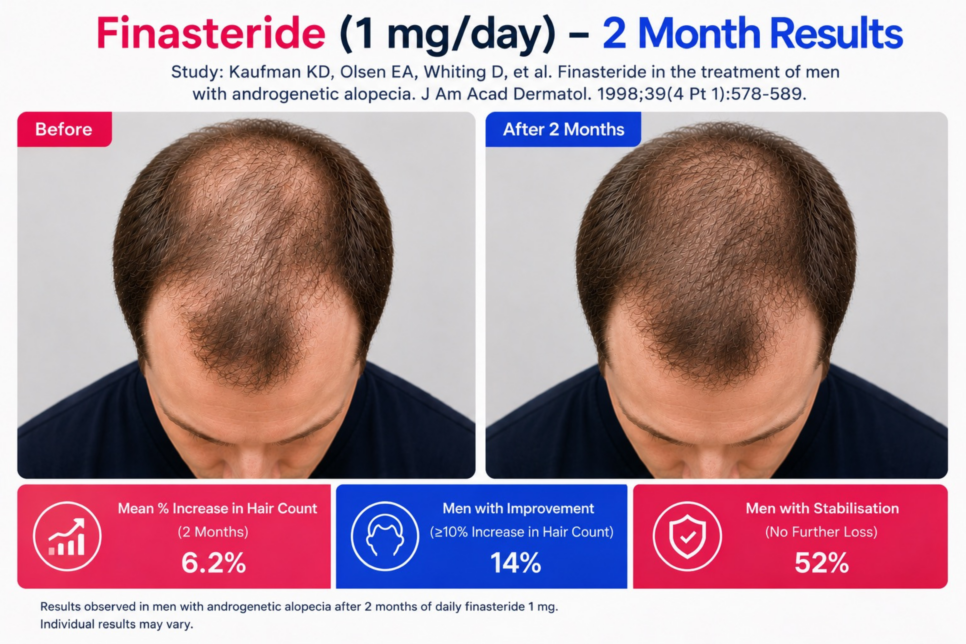
Month 2: shedding may start to reduce

By months 2 to 3, some men notice that they are losing fewer hairs when washing, brushing or styling their hair.

Visible before and after changes are usually still limited at this stage. Hair may not look much thicker yet, especially in photos.

This stage is mainly about stabilising hair loss.

Finasteride Results: Month 2

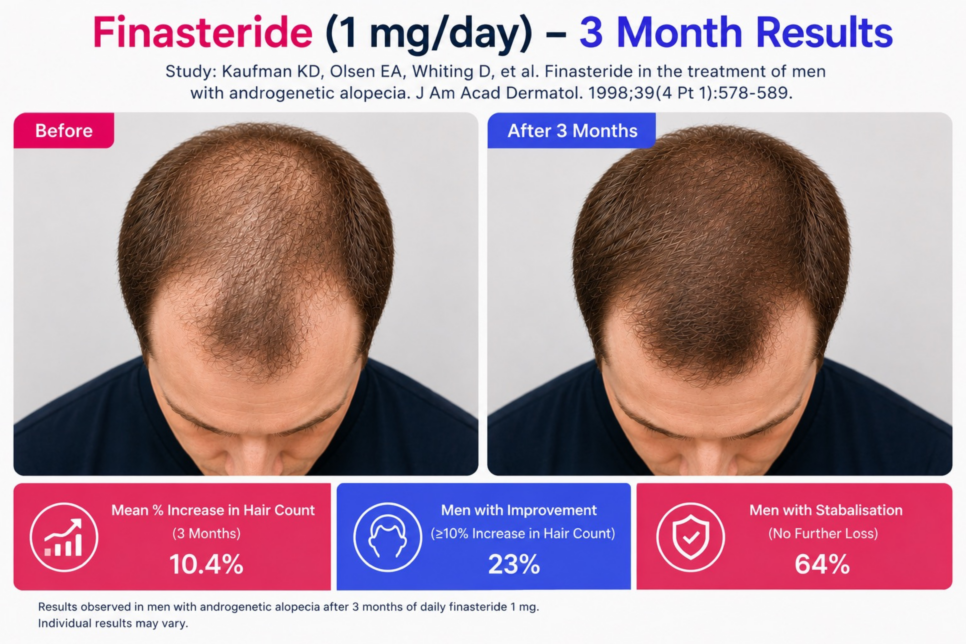
Month 3: early finasteride results may appear

Between 3 and 6 months, early finasteride results may become noticeable.

You may see:

  • Less hair fall
  • A fuller appearance in thinning areas
  • Slightly improved scalp coverage
  • Thicker-looking hair when styled
  • Slower thinning or recession

For many men, this is the first point where treatment starts to feel worthwhile. However, results can still be subtle, and progress may be easier to see in photos than in the mirror.

Finasteride Results: Month 3

Month 6: hair may look thicker and more stable

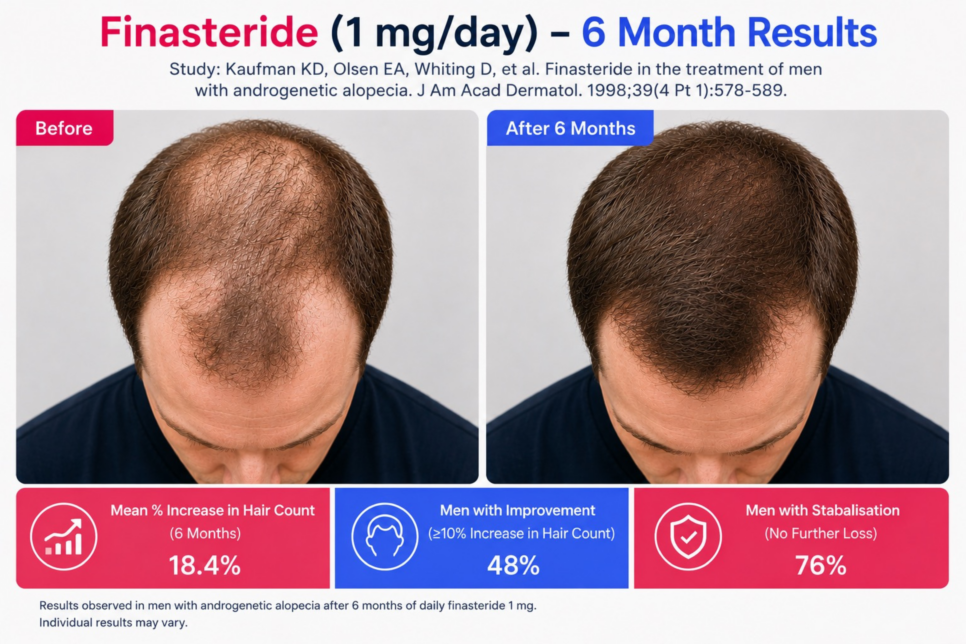
By 6 to 9 months, finasteride results are usually easier to assess.

At this stage, many men notice that their hair loss has slowed down or stabilised. The crown may look less thin, and the mid-scalp may appear fuller.

Hairline results can be more variable. Finasteride often works better on the crown and top of the scalp than on a deeply receded hairline.

Finasteride Results: Month 6

Month 9: best time to judge before and after results

Most men should assess their finasteride before and after results after 9 to 12 months of consistent daily use.

By this point, you should have a clearer idea of whether finasteride is:

  • Slowing your hair loss
  • Maintaining your current hair
  • Improving density
  • Reducing visible thinning
  • Helping your hair look thicker

If there has been no improvement after 12 months, or if hair loss continues to progress, speak to a prescriber or pharmacist about whether finasteride is still the right treatment for you.

1 year: long-term finasteride results

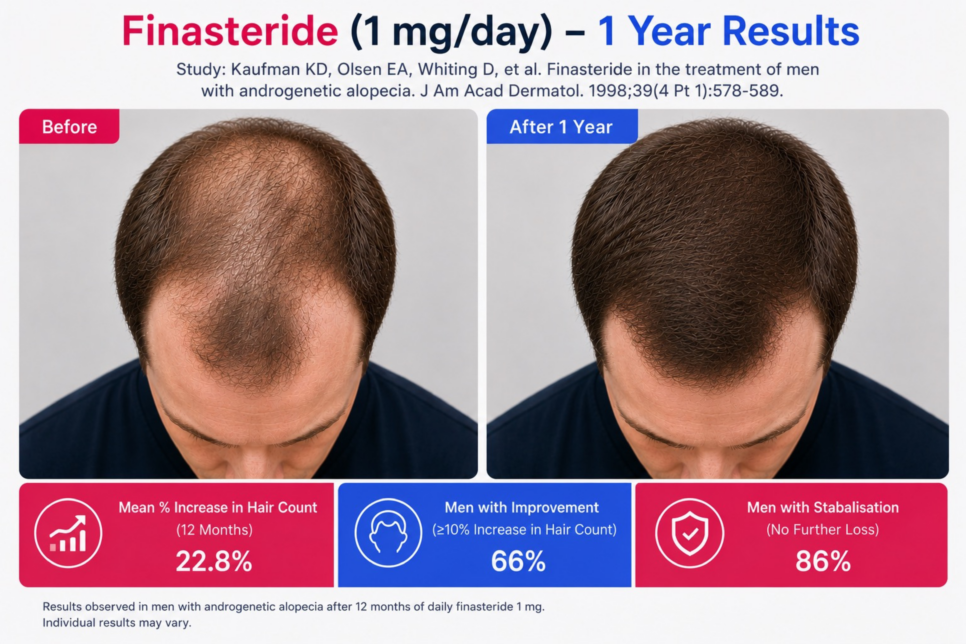
After one year of taking Finasteride, most people who respond well to treatment will have a much clearer idea of their long-term results.

This is typically the stage where the full cosmetic benefits become most noticeable, with many people seeing thicker hair, improved density, and significantly slower hair loss compared to when they started.

Finasteride Results: Year 1

Because hair growth is naturally slow, reaching the 12-month mark allows enough time for multiple hair growth cycles to take place. This gives weakened follicles a chance to recover and produce healthier, stronger hairs.

By 12 months, many people notice: 

  • Much less hair shedding than before treatment
  • Thicker and fuller-looking hair
  • Improved density around the crown and mid-scalp
  • Reduced scalp visibility
  • Stronger, healthier hair texture
  • Stabilised hair loss progression

Some people also experience visible regrowth in thinning areas, although the amount of regrowth varies from person to person.

For many, before-and-after photos show the biggest difference at the one-year point. Hair may appear darker, denser, and more evenly distributed across thinning areas.

However, results depend heavily on how advanced the hair loss was before starting treatment. People who begin finasteride earlier often achieve better outcomes because more hair follicles are still active and capable of producing new growth.

2 years: longer-term finasteride results

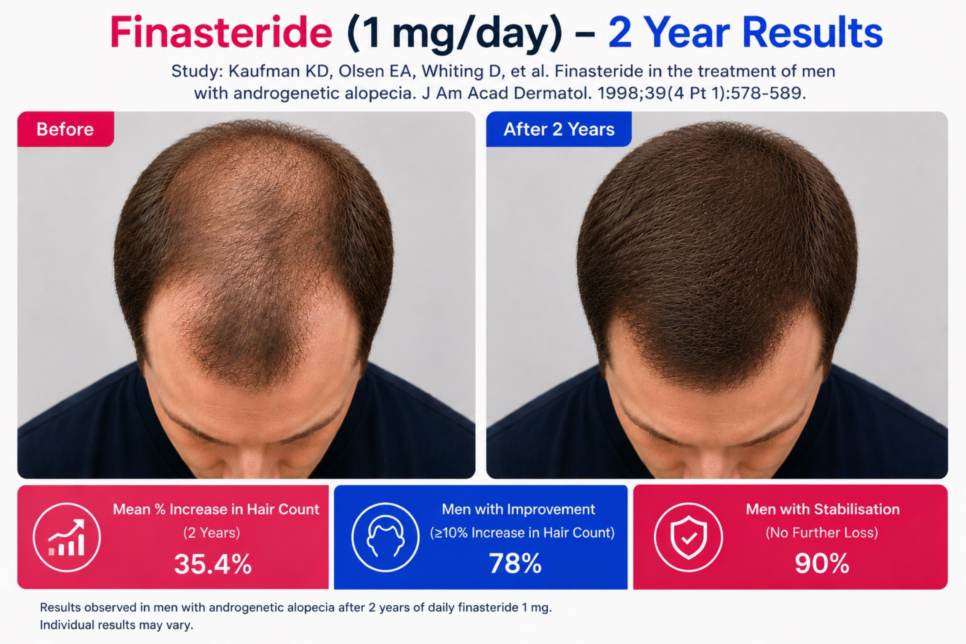
Many people reach the point where their results have fully matured.

By now, the medication has had enough time to consistently reduce DHT levels and support multiple healthy hair growth cycles, often leading to long-term stabilisation of hair loss.

Finasteride Results: Year 2

Finasteride before and after: what changes should you look for?

When comparing finasteride before and after photos, look for changes in:

  • Crown density
  • Scalp visibility
  • Hair parting width
  • Mid-scalp thickness
  • Hairline stability
  • Overall hair coverage
  • Reduced shedding over time

The best finasteride before and after photos are taken in the same lighting, from the same angle, with the same hairstyle and similar hair length.

Wet hair, harsh lighting and different camera angles can make hair loss look worse than it really is, so try to keep your photos consistent.

How to take accurate finasteride before and after photos

To track finasteride results properly:

  1. Take photos before starting treatment.
  2. Use the same room and lighting each time.
  3. Take photos every month.
  4. Photograph the front, temples, crown and top of the scalp.
  5. Keep your hair length similar where possible.
  6. Avoid comparing wet hair photos with dry hair photos.

Monthly photos are useful, but do not judge results too early. Finasteride usually needs at least 6 months before meaningful changes can be seen.

Why do finasteride results take so long?

Finasteride results take time because hair grows in cycles.

Although finasteride starts reducing DHT early, visible changes to hair thickness and scalp coverage can take several months. Thin, miniaturised hairs need time to move through the hair-growth cycle before they may appear thicker or healthier.

This is why stopping treatment too early can mean you never reach the stage where results become visible.

How to maximise your finasteride results

To give finasteride the best chance of working:

  • Take it every day as prescribed.
  • Do not stop after a few weeks because results are not immediate.
  • Track progress with monthly photos.
  • Review results after 6 to 12 months.
  • Consider whether combination treatment, such as minoxidil, may be suitable.
  • Speak to a prescriber if you have side effects or your hair loss continues to progress.

Some men use finasteride with minoxidil because they work in different ways. Finasteride targets DHT-related hair loss, while minoxidil helps stimulate hair growth. This combination may be helpful for some men, but it is not suitable for everyone.

Finasteride results: realistic expectations

Finasteride is not designed to give instant hair regrowth. It is a long-term treatment for male pattern hair loss.

For many men, a good result means hair loss has slowed, stabilised or become less noticeable. Some men will also see visible thickening, especially around the crown.

The key is consistency. Taking finasteride daily and reviewing progress over 6 to 12 months gives the best chance of seeing whether treatment is working.

Frequently Asked Questions

Finasteride usually takes 3 to 6 months before early results are noticeable. The best time to judge results is usually after 9 to 12 months of daily use.

Visible results after 1 month are unlikely. Finasteride may already be reducing DHT, but hair changes take longer to become noticeable.

Some men notice reduced shedding after 3 months, but visible regrowth is usually still limited. More noticeable results often appear after 6 months or longer.

Yes, some men see early visible results after 6 months. Hair may look thicker, shedding may reduce and thinning areas may appear more stable.

Finasteride results are usually best assessed after 9 to 12 months. Some men continue to see benefits beyond one year with ongoing treatment.

Look for changes in crown density, scalp visibility, hair parting width, mid-scalp thickness, hairline stability and overall hair coverage. Take photos in the same lighting, from the same angles and with similar hair length.

You may be more likely to respond well to finasteride if:

  • You are in the early stages of male pattern hair loss
  • Your crown or mid-scalp is thinning
  • You still have visible miniaturised hair in the thinning area
  • You take treatment every day
  • You continue treatment for at least 6 to 12 months
  • You track results with consistent photos

Finasteride is less likely to restore hair in areas that are already completely bald.

Finasteride results are not permanent if treatment is stopped. The medicine only works while you continue taking it. If you stop, the protective effect against DHT is lost, and male pattern hair loss can gradually progress again.

If you stop taking finasteride, DHT levels gradually rise again. Over time, hair loss is likely to continue, and any hair maintained by treatment may be lost over several months.

Finasteride results take time because hair grows in cycles. Even after DHT levels are reduced, existing hairs need to move through the hair-growth cycle before visible changes occur. Thin, miniaturised hairs may gradually become thicker, but this process can take several months.

Finasteride usually works best on the crown and top of the scalp. It may help slow hairline recession, but visible hairline regrowth is less predictable.

Whilst all of our content is written and reviewed by healthcare professionals, it is not intended to be substituted for or used as medical advice. If you have any questions or concerns about your health, please speak to your doctor.

Share