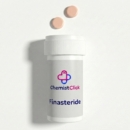
Male pattern hair loss is a common concern for many men, and finasteride and Propecia are two of the most well-known treatment options available.
While they’re often discussed as if they’re different medications, the reality is much simpler.
In this article, we’ll clearly explain the similarities and differences between finasteride and Propecia, how they work, and which option may make the most sense for you.
Finasteride and Propecia work by lowering levels of a hormone called DHT, which plays a major role in male pattern hair loss.
DHT causes hair follicles to shrink over time, leading to thinner hair and eventually hair loss.
These medications block an enzyme that helps convert testosterone into DHT.
With less DHT around the scalp, hair follicles can stay healthier for longer, which can slow hair loss and help maintain existing hair.
Although finasteride and Propecia are often compared as separate treatments, they are the same medication at their core.
The key differences come down to branding, cost, and how they are prescribed, rather than how well they work.
| Feature | Finasteride | Propecia |
|---|---|---|
| What it is | Generic prescription medication | Brand-name prescription medication |
| Active ingredient | Finasteride | Finasteride |
| Main use | Treats male pattern hair loss | Treats male pattern hair loss |
| How it works | Reduces DHT, a hormone linked to hair loss | Reduces DHT, a hormone linked to hair loss |
| Typical dose | 1 mg once daily | 1 mg once daily |
| Effectiveness | Same effectiveness as Propecia | Same effectiveness as finasteride |
| Side effects | Possible sexual side effects or mood changes | Same possible side effects |
| Cost | Usually less expensive | Usually more expensive |
Short takeaway:
Finasteride and Propecia are the same medication in terms of how they work and how effective they are. The main difference is the name and price; finasteride is the lower-cost generic option, while Propecia is the brand-name version.
The cost of hair loss treatment can add up quickly, especially when taking medication long term.
While finasteride and Propecia tablets work in exactly the same way, the price difference between the brand-name and generic versions can be significant.
The table below compares the cost of Propecia and finasteride across different pack sizes, clearly showing how much you can save by choosing the generic option.
| Quantity | Propecia (Brand) | Finasteride (Generic) | Savings with finasteride |
|---|---|---|---|
| 28 tablets | £49.99 | £13.89 | £36.10 |
| 56 tablets | £95.49 | £27.75 | £67.74 |
| 84 tablets | £139.99 | £33.99 | £106.00 |
| 168 tablets | £269.99 | £58.79 | £211.20 |
For most people, generic finasteride is the practical first choice.
It contains the same medicine, works in the same way, and is usually far more affordable, making it easier to stick with long term, which is key for hair loss treatment.
If finasteride or Propecia are under consideration, Propecia may appeal if you prefer a well-known brand, consistent tablet appearance, or simply feel more confident using the original branded product. However, it does not offer extra effectiveness or improved safety compared with generic finasteride.
If cost, long-term use, and value matter most, generic finasteride is usually the better option.
If brand reassurance is important to you, Propecia is still a valid choice.
In both cases, consistency and patience matter far more than the name on the box.
Yes. Propecia and finasteride contain the same active ingredient and work in the same way to treat male pattern hair loss. Propecia is simply the brand name, while finasteride is the generic version. They are equally effective. The main difference is usually the price, with generic finasteride being cheaper.
Electronic Medicines Compendium. (n.d.). Propecia 1 mg Film-Coated Tablets. Retrieved on 21st August 2024, from: https://www.medicines.org.uk/emc/product/2194
ct/2194 NHS (n.d.). How and When to Take Finasteride. Retrieved on 21st August 2024, from: https://www.nhs.uk/medicines/finasteride/how-and-when-to-take-finasteride/
NHS (n.d.). About Finasteride. Retrieved on 21st August 2024, from: https://www.nhs.uk/medicines/finasteride/about-finasteride/
MHRA (2009). MHRA Public Assessment Report: The Risk Of Male Breast Cancer With Finasteride. Retrieved on 21st August 2024, from: https://assets.publishing.service.gov.uk/media/5df7610c40f0b60959adc737/Finasteride_risk_of_male_breast_cancer.pdf
Science Direct (2015). Use of Finasteride in the Treatment of Men With Androgenetic Alopecia (Male Pattern Hair Loss). Retrieved on 21st August 2024, from: https://www.sciencedirect.com/science/article/pii/S0022202X15529357
Merk & Co. (2010). Propecia. Retrieved on 21st August 2024, from: https://www.accessdata.fda.gov/drugsatfda_docs/label/2011/020788s018lbl.pdf
Whilst all of our content is written and reviewed by healthcare professionals, it is not intended to be substituted for or used as medical advice. If you have any questions or concerns about your health, please speak to your doctor.