Rodent urine, droppings and nesting material can dry out over time. If disturbed, they can break into small particles and mix with dust in the air.
This can happen when you:
Once these particles are airborne, they may be inhaled. A mask or respirator can help reduce this risk, but only if it is suitable and worn correctly.
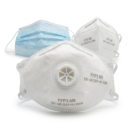
Surgical masks may provide some basic barrier protection, but they are not the best choice for hantavirus risk.
A surgical mask is usually designed to protect against splashes, droplets and fluid exposure. It can help reduce the spread of droplets from the wearer, and it may provide some protection from larger particles. However, it does not seal tightly around the face.
This means air can leak in through gaps around the cheeks, nose and chin. If contaminated dust or fine particles are in the air, they may bypass the mask and be inhaled.
Surgical masks work mainly by creating a physical barrier. They are useful for blocking:
However, they are not designed as tight-fitting respiratory protective equipment.
Surgical masks have several limitations when it comes to hantavirus protection:
For low-risk general use, a surgical mask may be better than no mask. But if you are cleaning rodent droppings or contaminated material, an FFP2 or FFP3 respirator is more appropriate.
Yes, an FFP2 mask can help reduce the risk of inhaling airborne particles that may contain hantavirus.
FFP2 masks are filtering facepiece respirators. Unlike surgical masks, they are designed to fit more closely to the face and filter fine airborne particles. This makes them more suitable when cleaning areas where rodent urine, droppings or nesting material may be present.
UKHSA guidance on reducing infection risk from rodents advises people not to sweep or vacuum rodent urine, droppings or nests because this creates airborne particles. It also advises using gloves and, ideally, a suitable face mask such as an FFP1 or FFP2 dust mask in relevant cleaning situations.
FFP2 masks work in two main ways:
First, the mask material filters out airborne particles. This helps reduce the number of fine particles that can be inhaled.
Second, the close-fitting shape helps reduce air leakage around the sides of the mask. This is important because unfiltered air can enter through gaps if the mask does not fit properly.
An FFP2 mask only works properly if it fits well. If there are gaps around the nose, cheeks or chin, contaminated air can leak in.
Protection can be reduced by:
For best results, the mask should form a close seal around the face before you begin cleaning.
FFP3 masks offer a higher level of respiratory protection than FFP2 masks and are generally the better option for higher-risk cleaning.
FFP3 provides the highest protection level among these common disposable respirator types.
An FFP3 respirator may be more appropriate if:
For professional pest control, heavy contamination or enclosed spaces, specialist advice and appropriate PPE may be needed.
| Mask type | How it works | Protection level | Suitable for hantavirus cleaning? |
|---|---|---|---|
| Surgical mask | Loose barrier against droplets and splashes | Low | Not ideal |
| FFP2 mask | Close-fitting respirator that filters fine particles | Moderate to high | Suitable for many lower-risk cleaning tasks |
| FFP3 mask | Higher-filtration respirator with stronger protection factor | Highest | Better for higher-risk or heavy contamination |
No mask can guarantee complete protection. Even a high-quality respirator can fail if it does not fit correctly, is removed incorrectly, becomes damaged, or is used without other precautions.
Masks reduce risk; they do not remove risk entirely.
The best protection comes from combining:
For most people cleaning small amounts of rodent contamination, an FFP2 mask offers a practical level of protection and is much more suitable than a surgical mask.
For heavier contamination, enclosed spaces, dusty areas, dead rodents or higher-risk exposure, an FFP3 mask is likely to be more appropriate because it offers a higher protection factor.
Surgical masks are not the preferred option for hantavirus cleaning because they do not seal tightly and are not designed to protect against fine airborne particles.
Face masks can help protect against hantavirus, but the type of mask matters.
A surgical mask may provide limited barrier protection, but it is not designed for fine airborne particles. An FFP2 mask offers much better protection and is a suitable option for many lower-risk cleaning situations involving rodent droppings or nesting material. An FFP3 mask provides the highest level of protection and is more suitable for higher-risk contamination.
Most importantly, do not sweep or vacuum rodent droppings. Wet the area with disinfectant first, wear gloves, use a suitable respirator and clean carefully to avoid making contaminated particles airborne.
A surgical mask may provide limited protection against larger droplets and splashes, but it is not ideal for hantavirus cleaning. It does not seal tightly to the face and is not designed to protect against fine airborne dust.
Yes, an FFP2 mask can help reduce the risk of breathing in airborne particles that may contain hantavirus, especially when cleaning areas contaminated with rodent droppings, urine or nesting material.
Yes. FFP3 masks offer a higher level of respiratory protection than FFP2 masks. They are generally more suitable for heavy contamination, dusty areas, enclosed spaces or higher-risk cleaning.
No. You should not vacuum or sweep rodent droppings, even if you are wearing a mask. Vacuuming can make contaminated particles airborne, increasing the risk of inhalation.
You should wear gloves and a suitable mask, ideally an FFP2 or FFP3 respirator depending on the level of contamination. You should also wet the area with disinfectant before cleaning.
For a small, low-risk household clean-up, an FFP2 mask may be suitable. For larger amounts of contamination, dead rodents, dusty enclosed areas or higher-risk exposure, an FFP3 mask is the better option.
Whilst all of our content is written and reviewed by healthcare professionals, it is not intended to be substituted for or used as medical advice. If you have any questions or concerns about your health, please speak to your doctor.