
Discreet and confidential delivery

300,000+ trusted patients

No hidden fees

10,000+ 5* reviews


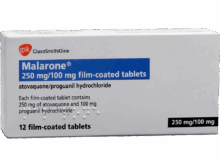
Atovaquone/Proguanil (Generic Malarone) 250 mg / 100 mg
from
£29.50
Atovaquone/Proguanil (Generic Malarone) 250 mg / 100 mg
Buy atovaquone/proguanil online
How to buy atovaquone/proguanil online
- Complete a short online consultation about your destination, travel dates, health and any medicines you take.
- Our UK prescriber reviews your answers and decides whether atovaquone/proguanil, and which pack, is suitable for your trip.
- If it is approved, our pharmacy dispatches your tablets in discreet packaging. Order in good time so you can start 1 to 2 days before you arrive.
Atovaquone/Proguanil Prices
| Name & Dosage | x16 Tablets (1 Week) |
x17 Tablets (8 Days) |
x18 Tablets (9 Days) |
x19 Tablets (10 Days) |
x21 Tablets (12 Days) |
x23 Tablets (2 Weeks) |
x30 Tablets (3 Weeks) |
x37 Tablets (4 Weeks) |
x51 Tablets (6 Weeks) |
x65 Tablets (8 Weeks) |
x79 Tablets (10 Weeks) |
x93 Tablets (12 Weeks) |
x193 Tablets (6 Months) |
|---|---|---|---|---|---|---|---|---|---|---|---|---|---|
| Atovaquone/Proguanil 250mg/100mg Tablets (1 Week) |
£29.50 | ||||||||||||
| Atovaquone/Proguanil 250mg/100mg Tablets (8 Days) |
£31.35 | ||||||||||||
| Atovaquone/Proguanil 250mg/100mg Tablets (9 Days) |
£33.20 | ||||||||||||
| Atovaquone/Proguanil 250mg/100mg Tablets (10 Days) |
£35.05 | ||||||||||||
| Atovaquone/Proguanil 250mg/100mg Tablets (12 Days) |
£38.75 | ||||||||||||
| Atovaquone/Proguanil 250mg/100mg Tablets (2 Weeks) |
£42.45 | ||||||||||||
| Atovaquone/Proguanil 250mg/100mg Tablets (3 Weeks) |
£55.40 | ||||||||||||
| Atovaquone/Proguanil 250mg/100mg Tablets (4 Weeks) |
£68.35 | ||||||||||||
| Atovaquone/Proguanil 250mg/100mg Tablets (6 Weeks) |
£94.25 | ||||||||||||
| Atovaquone/Proguanil 250mg/100mg Tablets (8 Weeks) |
£120.15 | ||||||||||||
| Atovaquone/Proguanil 250mg/100mg Tablets (10 Weeks) |
£134.18 | ||||||||||||
| Atovaquone/Proguanil 250mg/100mg Tablets (12 Weeks) |
£159.38 | ||||||||||||
| Atovaquone/Proguanil 250mg/100mg Tablets (6 Months) |
£356.95 |
Summary for Atovaquone/Proguanil (Generic Malarone)
| Medication Class | Antimalarial |
|---|---|
| Mechanism of action | Atovaquone blocks energy production in the malaria parasite's mitochondria, and proguanil (through its breakdown product cycloguanil) blocks the parasite's use of folate. Together they act on the parasite in the liver and in the blood |
| Active ingredient | Atovaquone / Proguanil Hydrochloride |
| Strength | 250 mg / 100 mg |
| Legal category | Prescription-only medicine (POM) |
| Brand equivalent | Malarone |
| Effective within | Typically, 2-3 days but the full course must be taken to ensure its overall effectiveness |
| Dosage Instructions | One tablet once a day, at the same time each day, with food or a milky drink |
| Manufacturer | Mylan, Amarox, Teva |
| Use with alcohol | No interaction with alcohol is listed in the product information |
About Atovaquone/Proguanil tablets
Key Points
- Atovaquone/proguanil is a prescription tablet that helps prevent malaria, including the most dangerous type, falciparum malaria.
- Take one tablet a day with food or a milky drink, from 1 to 2 days before you arrive until 7 days after you leave.
- It contains the same active ingredients, at the same strength, as Malarone.
- The most common side effects are headache, feeling or being sick, stomach pain and diarrhoea.
- No antimalarial gives complete protection, so avoid mosquito bites as well and get urgent medical help for a fever during or after your trip.
What is atovaquone/proguanil?
Atovaquone/proguanil is an antimalarial tablet that combines two medicines, atovaquone 250 mg and proguanil hydrochloride 100 mg. It is licensed to prevent falciparum malaria in adults and children who weigh more than 40 kg, and to treat uncomplicated falciparum malaria. It is the generic version of Malarone, so it is sometimes called generic Malarone.
How does atovaquone/proguanil work?
Atovaquone/proguanil works by killing the malaria parasite at an early stage in the liver, as well as in the blood. Atovaquone stops the parasite’s mitochondria making energy, and proguanil adds to this effect and blocks the parasite’s use of folate. Because it acts in the liver, you only need to keep taking it for 7 days after you leave a malaria area, rather than 4 weeks as with some other antimalarials.
Who is atovaquone/proguanil suitable for?
Atovaquone/proguanil may be suitable for adults travelling to areas where malaria is found. It is started 1 to 2 days before you arrive. Our prescriber checks your destination, your health and any medicines you take. It is not suitable if you have severe kidney disease, and other medicines are usually advised in pregnancy.
How long can you take atovaquone/proguanil for?
You can take atovaquone/proguanil for the whole of your trip plus 7 days afterwards. UK guidance says it can be taken confidently for trips of up to a year, and longer if you are not having significant side effects. For trips over 12 weeks, our prescriber will decide whether it is suitable and how many tablets to supply.
Atovaquone/Proguanil Dosage Instructions
How do you take atovaquone/proguanil?
Take one tablet once a day, at the same time each day, with food or a milky drink, starting 1 to 2 days before you enter the malaria area. Food or milk helps your body absorb the atovaquone.
- Start 1 to 2 days before you arrive. Take your first tablet 1 or 2 days before you enter the malaria area.
- Take one tablet every day while you are there. Take it with a meal or a milky drink, at about the same time each day. Swallow it whole if you can: the leaflet says the tablets should preferably not be crushed.
- Keep going for 7 days after you leave. Stopping early raises your risk of malaria.
- Use bite prevention too. Use an insect repellent containing 50% DEET on exposed skin, sleep under an insecticide-treated net unless the room is well screened or has working air conditioning that keeps mosquitoes out, and cover up with long sleeves, long trousers and socks outdoors, especially from dusk to dawn.
What time of day should you take atovaquone/proguanil?
Any time of day is fine, as long as you take it at the same time each day with food or a milky drink. Many people take it with breakfast or their evening meal.
What if you forget a dose?
Take it as soon as you remember, then carry on at your usual time. Do not take two tablets to make up for a missed one. If you miss several doses, contact our pharmacist or a doctor, as your protection may be reduced.
What if you are sick after taking a tablet?
If you are sick within 1 hour of taking a tablet, take another one straight away. If you keep being sick or have diarrhoea, carry on taking it, but the medicine may be absorbed less well, so take extra care to avoid bites and get medical advice.
When should you see a doctor instead?
Get medical help urgently, during your trip or after you return, if you have:
- A high temperature, or feeling hot, cold or shivery, with or without headache, muscle aches, tiredness, sickness or diarrhoea, during your trip or within a year of returning. Malaria is an emergency: get an urgent GP appointment or help from NHS 111 the same day, say where you have travelled and ask for a malaria blood test
- Confusion, severe drowsiness, a fit or difficulty breathing. Call 999
Atovaquone/Proguanil Side Effects
What are the side effects of atovaquone/proguanil?
The most common side effects of atovaquone/proguanil are headache, feeling sick, being sick, stomach pain and diarrhoea, which affect more than 1 in 10 people. Taking it with food may help. Not everybody gets side effects.
Stop taking it and get help straight away if you have
- Rash or itching with sudden wheezing, tightness of the chest or throat, difficulty breathing, or swelling of the eyelids, face, lips or tongue (a serious allergic reaction). Call 999 if you are struggling to breathe
- A severe rash with blisters or peeling skin, or a rash with dark target-like spots (signs of a serious skin reaction)
Very common (more than 1 in 10 people)
Headache, feeling sick (nausea), being sick (vomiting), stomach pain and diarrhoea.
Common (up to 1 in 10 people)
Dizziness, difficulty sleeping, unusual dreams, depression, loss of appetite, fever, rash, itching, cough and allergic reactions. Blood tests may show anaemia, a low white cell count, low sodium or raised liver enzymes.
Uncommon (up to 1 in 100 people)
Anxiety, a pounding heartbeat (palpitations), mouth inflammation, hair loss, hives and raised amylase in blood tests.
Rare (up to 1 in 1,000 people)
Seeing or hearing things that are not there (hallucinations).
Frequency not known
Serious allergic reactions, inflamed blood vessels, mouth ulcers, panic attacks, nightmares, crying, psychotic episodes, fits, a fast heartbeat, liver inflammation, severe skin reactions (Stevens-Johnson syndrome, erythema multiforme), blistering, peeling skin and skin sensitivity to sunlight.
Contact a doctor if you have hallucinations, fits or changes in mood. Frequencies are taken from the atovaquone/proguanil SmPC. Dizziness has been reported: do not drive or use machinery if you feel dizzy. You can report side effects through the MHRA Yellow Card scheme (yellowcard.mhra.gov.uk).
Atovaquone/Proguanil Warnings
Do not take atovaquone/proguanil if you
- Are allergic to atovaquone, proguanil or any of the other ingredients
- Have severe kidney disease
- Weigh less than 40 kg
- Are pregnant, might be pregnant, are trying for a baby or are breastfeeding (see your GP or a travel clinic)
Tell our prescriber first if you
- Have any kidney or liver problems
- Take warfarin or another blood thinner, rifampicin or rifabutin, metoclopramide, a tetracycline antibiotic, etoposide or HIV medicines (see Interactions)
- Have had malaria while taking atovaquone/proguanil before, as a different medicine may be needed
- Are travelling for more than 12 weeks
Other precautions
- Atovaquone/proguanil does not protect against every type of malaria. It does not act on the dormant liver stage of vivax or ovale malaria, which can cause illness months after travel.
- If you keep having diarrhoea or vomiting, the tablets may be absorbed less well. Keep taking them, avoid bites and seek medical advice.
- No antimalarial gives 100% protection. Get urgent medical help for any fever during your trip or within a year of returning.
Atovaquone/Proguanil Interactions
Some medicines can lower the amount of atovaquone in your blood, which may make it less effective, and proguanil can increase the effect of warfarin. Tell our prescriber about all the medicines you take, including medicines bought without a prescription and herbal remedies.
| Medicine | What it means |
| Rifampicin and rifabutin (antibiotics for tuberculosis and other infections) | Lower atovaquone levels. Taking them together is not recommended |
| Metoclopramide (for sickness) | Lowers atovaquone levels by about half. Another anti-sickness medicine should be used |
| Tetracycline antibiotics | Lower atovaquone levels. Our prescriber will check whether they can be taken together |
| Efavirenz, boosted protease inhibitors and some other HIV medicines | Can greatly lower atovaquone levels. Avoid if possible: speak to your HIV clinic |
| Warfarin and similar blood thinners | Proguanil can increase their effect. Your INR may need checking when you start and stop atovaquone/proguanil |
| Etoposide (a cancer medicine) | Atovaquone can raise etoposide levels. Tell your cancer team |
| Indinavir (an HIV medicine) | Atovaquone can lower indinavir levels |
| Alcohol | No interaction is listed in the product information |
Can you drink alcohol with atovaquone/proguanil?
No interaction between atovaquone/proguanil and alcohol is listed in the product information. If drinking makes you sick within 1 hour of a tablet, take another tablet, as the dose may not have been absorbed.
Atovaquone/Proguanil and Pregnancy/Breastfeeding
Can you take atovaquone/proguanil when pregnant?
Other antimalarials are usually advised in pregnancy, because the safety of atovaquone/proguanil in pregnancy has not been established. UK guidance says it may be used if there are no other suitable options, with a higher dose of folic acid (5 mg a day). Speak to your GP or a travel clinic, and ideally avoid travel to malaria areas while pregnant. If you became pregnant while taking it, this is not a reason to end the pregnancy: speak to your GP or midwife.
Can you take atovaquone/proguanil when breastfeeding?
The product information says atovaquone/proguanil should not be taken while breastfeeding. UK guidance says it can be used if there is no suitable alternative. We will not supply it online if you are breastfeeding [confirm]. Speak to your GP or a travel clinic. Your baby will also need protection from mosquito bites, as breast milk does not protect them.
Read the leaflet before you start taking atovaquone/proguanil. The leaflet in your pack is the version for the product you receive.
Frequently Asked Questions
Yes. Atovaquone/proguanil contains the same active ingredients, at the same strength (250 mg atovaquone and 100 mg proguanil hydrochloride), as Malarone, and it is taken in the same way. Generic medicines must meet the same standards as the brand. The inactive ingredients and the look of the tablet can differ.
The main differences are the name, the manufacturer, the packaging and the price. The medicine itself, the dose and how you take it are the same. See our Malarone page if you prefer the brand.
Our generic atovaquone/proguanil tablets are a prescription-only medicine, so you complete an online consultation and our prescriber decides whether they are suitable. A pharmacy version, Maloff Protect, can be sold by a pharmacist without a prescription to adults weighing 40 kg or more, for trips of up to 12 weeks.
Yes, Maloff Protect contains the same active ingredients at the same strength as Malarone and generic atovaquone/proguanil. It is licensed as a pharmacy medicine for adults travelling for up to 12 weeks.
Atovaquone/proguanil is one of the antimalarials recommended in UK guidance for preventing falciparum malaria. No antimalarial gives complete protection, so you still need to avoid mosquito bites and get urgent medical help for a fever during or after your trip.
Yes, it is possible, especially if doses are missed, the tablet is vomited, or you stop early. Atovaquone/proguanil also does not act on the dormant liver stage of vivax and ovale malaria. If you get a fever during your trip or within a year of returning, get a malaria blood test the same
Malaria parasites from a bite just before you leave first develop in the liver. Atovaquone/proguanil kills them at this stage, and 7 days covers it. Stopping early means you are not fully protected.
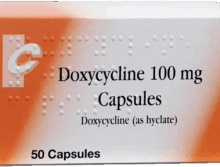
No. Atovaquone/proguanil is an antimalarial (antiprotozoal) medicine. Malaria is caused by a parasite, not bacteria. Doxycycline, another antimalarial, is an antibiotic.
Neither is better for everyone. Atovaquone/proguanil is taken for 7 days after you leave, and doxycycline for 4 weeks. Doxycycline can make your skin more sensitive to the sun and can cause thrush. Which suits you depends on your destination, health, other medicines and trip length. Our prescriber can advise you.
Atovaquone has a half-life of about 2 to 3 days in adults, so most of it has left your body within about 2 weeks. Proguanil’s half-life is about 12 to 15 hours. UK guidance suggests waiting 2 weeks after your last tablet before trying for a baby.
Side effects such as headache, sickness or an upset stomach are often mild. If they continue or bother you, contact our pharmacist or a doctor. Do not stop the tablets during your trip without getting advice on another antimalarial.
Atovaquone on its own is a liquid medicine used to treat mild to moderate Pneumocystis pneumonia, a type of pneumonia, in people who cannot take the usual antibiotic. It is a different product from atovaquone/proguanil tablets, which are for malaria.
Yes, it is also licensed to treat uncomplicated falciparum malaria, at a higher dose for 3 days. If you think you have malaria, do not treat yourself: get a blood test and medical assessment the same day.
Usually yes. Keep the tablets in their original labelled pack with the pharmacy label, and check your airline’s and destination’s rules.
Each person needs their own consultation, so your partner should order through their own account. We do not supply it to under-18s online. Children need a lower dose based on their weight, using children’s tablets, so speak to your GP or a travel clinic.
Written and clinically reviewed by our pharmacists


Other options include:

Our Awards & Certifications
Our team of experienced pharmacists and healthcare professionals are dedicated to providing the highest level of care and service to every customer, ensuring that they receive the best possible healthcare experience.

Our Clients Say:


An excellent organisation. Our malaria tablets were easy to order, came with clear instructions and fast delivery. A good price too. We will definitely use this company again for medication.
By Jenny T.
Quick and easy process, good communication. I received a call from them just to check my regular medication.
By Linda H.
A very prompt, professional and discreet service which assists with daily living. Loyalty is rewarded when re-ordering and orders arrive on time.
By Anthony J.
So easy to browse, choose and order what you want. Great prices and fast delivery. Excellent company to deal with.
By Graeme H.
To be fair, I've checked out other pharmacy sites and done the comparisons on price. I'm very happy to purchase from Chemist Click. Delivery great too, even the cheapest option.
By Stephen L.
Always use Chemist Click, their service is second to none, very quick delivery on my purchases and never let me down, highly recommended.
By Ian H.
I am very happy with the speedy delivery, the professionalism and the value for money.
By Roy K.
Chemist Click is extremely easy to use and also user friendly. You get what you need without any hassle or hesitation. Delivery is very quick and delivered as stated. This is a great service for anyone of all ages and abilities.
By Mark P.Related articles...


