What are the side effects of retatrutide?

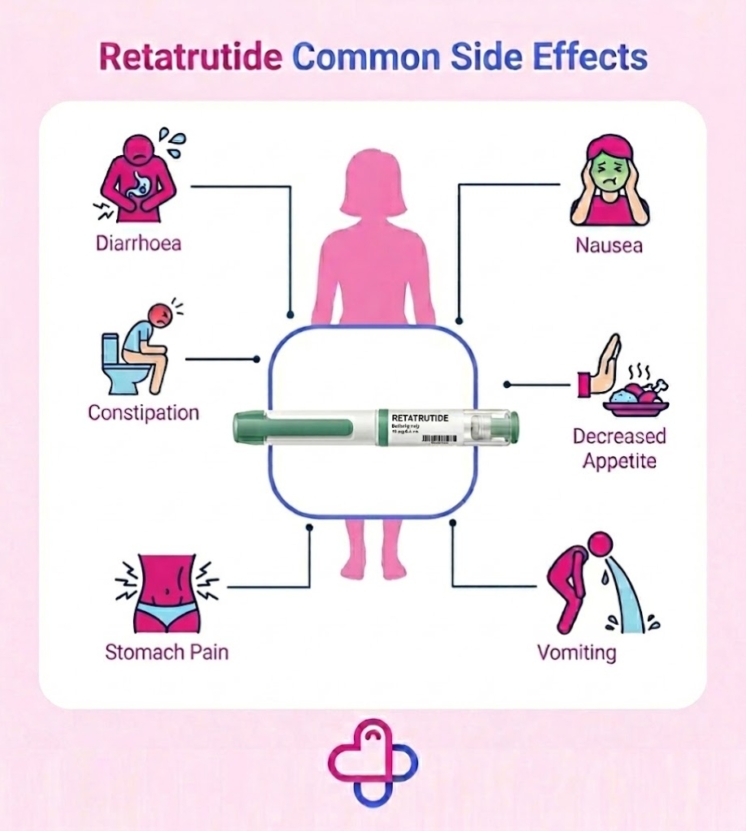
The most common side effects of retatrutide are stomach and digestive symptoms. These include:

  • nausea
  • vomiting
  • diarrhoea
  • constipation
  • bloating
  • burping
  • indigestion
  • stomach pain or discomfort
  • feeling full quickly after eating

These symptoms happen because retatrutide affects gut hormone pathways involved in appetite, digestion and weight regulation. It may slow stomach emptying and reduce appetite, which can make some people feel sick, bloated or uncomfortable after eating.

Retatrutide is still investigational and is not currently licensed by the MHRA for weight loss in the UK. (Further reading: Where to buy retatrutide in the UK)

Common side effects of retatrutide

Retatrutide side effects in clinical trials

In the TRIUMPH-1 Phase 3 trial, the most common retatrutide side effects were nausea, diarrhoea, constipation and vomiting.

Side effect 4mg retatrutide 9mg retatrutide 12mg retatrutide Placebo
Nausea 28.6% 38.4% 42.4% 14.8%
Diarrhoea 25.2% 34.1% 32.0% 13.5%
Constipation 23.8% 25.9% 26.1% 10.9%
Vomiting 10.6% 22.8% 25.3% 4.8%
Stopped treatment due to side effects 4.1% 6.9% 11.3% 4.9%

When do retatrutide side effects start?

Retatrutide side effects can start on day 1, but they do not always happen immediately.

Some people may notice nausea, bloating, burping or appetite changes within the first 24 to 48 hours after an injection. Others may develop symptoms gradually over the first few weeks.

Side effects are more likely to start or worsen:

  • after the first dose
  • after a dose increase
  • after eating a large meal
  • after fatty, greasy or spicy food
  • when reaching a higher dose

How long do retatrutide side effects last?

Retatrutide side effects may last a few days, several weeks or longer.

Digestive side effects such as nausea, diarrhoea, constipation and vomiting are often worse when treatment starts or after a dose increase. They may improve as the body adjusts, but some people may continue to experience symptoms at higher doses.

Severe, persistent or worsening side effects should not be ignored. Anyone who has used an unlicensed product labelled as retatrutide should seek medical advice if they feel unwell.

Further reading: Retatrutide dosage

Long-term side effects of retatrutide

The long-term side effects of retatrutide are not fully known yet because the medicine is still being studied and has not been approved for routine use in the UK.

So far, the most common side effects seen in clinical trials have been digestive symptoms, such as nausea, vomiting, diarrhoea, constipation, bloating, burping and indigestion. These are usually more noticeable when treatment starts or when the dose is increased.

Long-term safety monitoring is still important because retatrutide may cause significant weight loss and affects several hormone pathways. Areas that need further study include:

  • gallbladder problems, especially with rapid weight loss
  • pancreatitis, which is inflammation of the pancreas
  • changes in resting heart rate
  • thyroid safety
  • liver safety, especially with unregulated online products
  • muscle loss during rapid weight loss
  • nutritional deficiencies if food intake becomes too low
  • longer-term digestive symptoms

There is currently no confirmed evidence that retatrutide causes cancer in humans, but its long-term cancer safety profile has not yet been fully established.

Because retatrutide is not licensed in the UK, it should not be bought online or used outside an authorised clinical trial. Anyone using an unregulated product labelled as retatrutide should seek medical advice if they experience severe or persistent symptoms.

Weight Loss Treatment

Lose up to 23% of your starting weight

Check Eligibility
Rated Excellent
Trustpilot Icon

Retatrutide and nausea

Nausea is one of the most common retatrutide side effects.

In Phase 3 trials, nausea affected up to 42.4% of people taking retatrutide, depending on the dose. It was more common at higher doses.

Retatrutide nausea may feel like:

  • feeling sick
  • queasiness after eating
  • reduced appetite
  • early fullness
  • food aversion
  • an unsettled stomach

Nausea is more likely during the first few weeks, after a dose increase, or after eating large, greasy, fried, spicy or very sweet foods.

Retatrutide and vomiting

Vomiting can happen with retatrutide, especially at higher doses or after dose increases.

In Phase 3 trials, vomiting affected up to 25.3% of people taking retatrutide, compared with 4.8% on placebo.

Vomiting should be taken seriously if it is severe, persistent, or stops you from keeping fluids down. Repeated vomiting can lead to dehydration, dizziness, weakness and kidney strain.

Seek medical advice urgently if vomiting is severe, does not settle, or happens with severe abdominal pain, fainting, confusion, blood in vomit or signs of dehydration.

Retatrutide and diarrhoea

Diarrhoea is a common retatrutide side effect.

In Phase 3 trials, diarrhoea affected up to 34.1% of people taking retatrutide, compared with 13.5% on placebo.

Retatrutide diarrhoea may be more likely when treatment starts, after a dose increase, or after eating foods that are harder to digest. Fatty meals, alcohol, large portions and rich foods may make diarrhoea worse.

Seek medical advice if diarrhoea is severe, lasts for more than a few days, causes dehydration, or happens with blood, fever or severe abdominal pain.

Retatrutide and constipation

Constipation is also common with retatrutide.

In Phase 3 trials, constipation affected up to 26.1% of people taking retatrutide, compared with 10.9% on placebo.

Constipation may happen because retatrutide can reduce appetite, reduce food intake and slow digestion. People may also drink less fluid if they are eating less, which can make constipation worse.

Constipation may feel like:

  • passing stools less often
  • hard or dry stools
  • straining
  • bloating
  • abdominal discomfort
  • feeling that the bowel has not fully emptied

Retatrutide bloating, burping and indigestion

Retatrutide may cause bloating, burping, trapped wind, reflux or indigestion.

These symptoms may happen because food can remain in the stomach for longer. Some people may feel full quickly, feel bloated after eating, or notice more burping than usual.

Bloating and burping may be worse:

  • after eating
  • after large meals
  • after fatty or fried foods
  • after fizzy drinks
  • when eating quickly
  • when lying down soon after food

Smaller, simpler meals are usually easier to tolerate than large, heavy meals.

Retatrutide side effects after eating

Some people may feel worse after eating while taking retatrutide. This may include nausea, bloating, burping, reflux, stomach pain, diarrhoea or vomiting.

This is more likely after:

  • large meals
  • greasy or fried foods
  • spicy foods
  • very sweet foods
  • fizzy drinks
  • alcohol
  • eating too quickly
  • lying down soon after meals

If retatrutide is approved in the future, patients are likely to need dietary guidance to help manage digestive side effects safely.

Does retatrutide cause hair loss?

Hair loss has not been established as a common side effect of retatrutide in clinical trials. However, rapid weight loss itself can sometimes trigger temporary shedding, known as telogen effluvium.

This type of hair loss can happen when the body goes through a significant physical change, including rapid weight loss, reduced calorie intake, low protein intake or nutritional deficiencies.

If retatrutide is approved in the future, patients losing weight quickly may need advice on protein intake, nutrition and safe weight loss monitoring. Anyone experiencing sudden, patchy or severe hair loss should speak to a healthcare professional.

Can retatrutide affect the heart?

Retatrutide has been linked with increases in resting heart rate in clinical trials. In the Phase 2 obesity trial, heart-rate increases were dose-dependent, peaked around 24 weeks and then declined afterwards.

A small increase in resting heart rate does not necessarily mean retatrutide causes serious heart problems, but heart safety is still being monitored because the medicine is investigational.

Seek medical advice urgently if you experience chest pain, fainting, severe dizziness, shortness of breath, or a fast or irregular heartbeat.

Does retatrutide cause cancer?

There is currently no confirmed evidence that retatrutide causes cancer in humans. However, retatrutide is still investigational, so its long-term cancer safety profile has not yet been fully established.

The main cancer concern discussed with medicines in this area is thyroid cancer, particularly medullary thyroid cancer. This warning is based mainly on findings seen with some incretin-based medicines in animal studies, rather than confirmed human cases.

Because retatrutide is not currently approved in the UK, the final cancer warnings, contraindications and safety guidance will only be confirmed if the medicine is reviewed and licensed by regulators.

Anyone with a personal or family history of medullary thyroid cancer, thyroid nodules, MEN2, or unexplained neck swelling should speak to a healthcare professional and avoid unregulated products sold online.

How to reduce retatrutide digestive side effects

Retatrutide is not approved in the UK, so there is no official patient guidance yet. However, in clinical practice with similar weight loss medicines, digestive symptoms are often managed by reducing triggers and keeping meals simple.

Side effect What may help
Nausea Eat smaller meals, avoid greasy foods and eat slowly
Vomiting Sip fluids, avoid large meals and seek help if vomiting is repeated
Diarrhoea Drink fluids, avoid alcohol and rich foods, and seek help if severe
Constipation Increase fluids, fibre and gentle movement where suitable
Bloating Avoid fizzy drinks, large meals and eating too quickly
Burping or reflux Avoid lying down soon after eating and reduce fatty meals

Summary

The most common retatrutide side effects are nausea, diarrhoea, constipation, vomiting, bloating, burping and indigestion. These symptoms are more likely when treatment starts, after a dose increase, or after eating large, fatty or rich meals.

In Phase 3 trials, nausea affected up to 42.4% of people, diarrhoea up to 34.1%, constipation up to 26.1%, and vomiting up to 25.3%, depending on the dose.

Retatrutide is not currently approved in the UK and should not be bought online or used outside an authorised clinical trial.

Frequently Asked Questions

From what clinical trials show so far, most side effects are temporary, typically peaking during the first few days after a dose increase and largely resolving within 8 to 12 weeks as the body adjusts to the medication.

Yes, but they are uncommon and usually mild.

Injection-site reactions (redness, itching, swelling) affects between 1-3% of user and mild rashes occur in 1-3% of users.

Yes, but as part of its intended mechanism.

Retatrutide activates GLP-1, GIP, and glucagon, which regulate appetite, insulin, and metabolism.

Observed hormonal effects include improved insulin sensitivity, reduced hunger hormones and possible improvement in testosterone (men) and ovulatory function (women with obesity)

There is no evidence of harmful thyroid, adrenal, or reproductive hormone suppression in clinical trials to date.

Yes, but only in a small number of users. It has been reported in 2-6% of users.

Yes, a sustained increase of around 5–10 beats per minute has been observed.

This persists during treatment, and heart rate returns back to normal once treatment has been stopped.

There is no evidence so far that this heart rate increase leads to heart damage or dangerous arrhythmias in healthy individuals, but monitoring may be recommended in patients with existing cardiovascular disease.

Around 0.5–1% of patients developed gallbladder-related issues in trials. This is largely due to rapid weight loss rather than direct toxicity.

Pancreatitis has been reported rarely, at approximately 0.3% of patients in trials. It remains an uncommon but serious potential risk.

So far, no confirmed cases of severe drug-induced liver injury have been reported. Mild liver enzyme changes can occur but are uncommon and usually temporary.

Yes, some lean mass is lost during weight reduction. Approximately 15–25% of total weight lost may be lean tissue, with 75–85% being fat loss. Resistance training and adequate protein intake can reduce this.

Retatrutide side effects may not stop immediately after the last dose. Because retatrutide is studied as a once-weekly injection, the medicine may continue to have effects for a period after stopping.

Digestive side effects such as nausea, vomiting, diarrhoea, constipation, bloating and burping may gradually improve once treatment is stopped, but this can vary from person to person.

Anyone who has used an unlicensed product labelled as retatrutide should seek medical advice if side effects are severe, persistent or worsening.

Body aches have not been established as one of the main retatrutide side effects. However, some people may feel generally achy or weak if they are dehydrated, eating too little, losing weight quickly, or experiencing vomiting or diarrhoea.

Body aches should be assessed if they are severe, persistent, associated with fever, muscle weakness, dark urine, chest pain or feeling very unwell.

Sleep problems are not currently recognised as one of the main retatrutide side effects. However, symptoms such as nausea, reflux, bloating, burping, abdominal discomfort or diarrhoea may disturb sleep, especially if they happen after eating late or lying down soon after a meal.

If sleep problems are persistent, severe, or linked with anxiety, palpitations, low mood or feeling unwell, speak to a healthcare professional.

Feeling sick after eating may happen because retatrutide can reduce appetite and slow digestion. Large meals, fatty foods, spicy foods and eating too quickly may make nausea worse.

Yes. Some people may notice side effects on day 1 or within the first 24 to 48 hours after an injection. Others may develop symptoms later, especially after dose increases.

Retatrutide has been associated with increases in resting heart rate in clinical trials. Seek medical advice if you develop chest pain, fainting, severe dizziness, shortness of breath, or a fast or irregular heartbeat.

There is not enough evidence to say that retatrutide directly causes eye damage. However, sudden vision loss, blurred vision, eye pain, flashing lights or new floaters should be treated as urgent symptoms.

There is no confirmed evidence that retatrutide causes thyroid cancer in humans. However, thyroid safety remains an important area of monitoring for medicines that act on incretin pathways.

Liver injury has not been established as a common expected side effect of regulated retatrutide used in clinical trials. However, serious liver toxicity has been reported with unapproved products labelled as retatrutide, which may be counterfeit, contaminated or incorrectly dosed.


  1. Eli Lilly and Company. TRIUMPH-1 Phase 3 trial results for retatrutide in obesity, https://pharmaceutical-journal.com/article/news/phase-iii-retatrutide-study-demonstrates-30-weight-loss

  2. Jastreboff AM, et al. Triple-Hormone-Receptor Agonist Retatrutide for Obesity. https://www.nejm.org/doi/full/10.1056/NEJMoa2301972

  3. MHRA. Two arrested during the MHRA’s largest ever seizure of unlicensed weight loss medicines, 2026. https://www.gov.uk/government/news/two-arrested-during-the-mhras-largest-ever-seizure-of-unlicensed-weight-loss-medicines

  4. Eli Lilly and Company. Retatrutide clinical development and safety information, 2026. https://trials.lilly.com/en-US/trial/405675

Whilst all of our content is written and reviewed by healthcare professionals, it is not intended to be substituted for or used as medical advice. If you have any questions or concerns about your health, please speak to your doctor.

Share