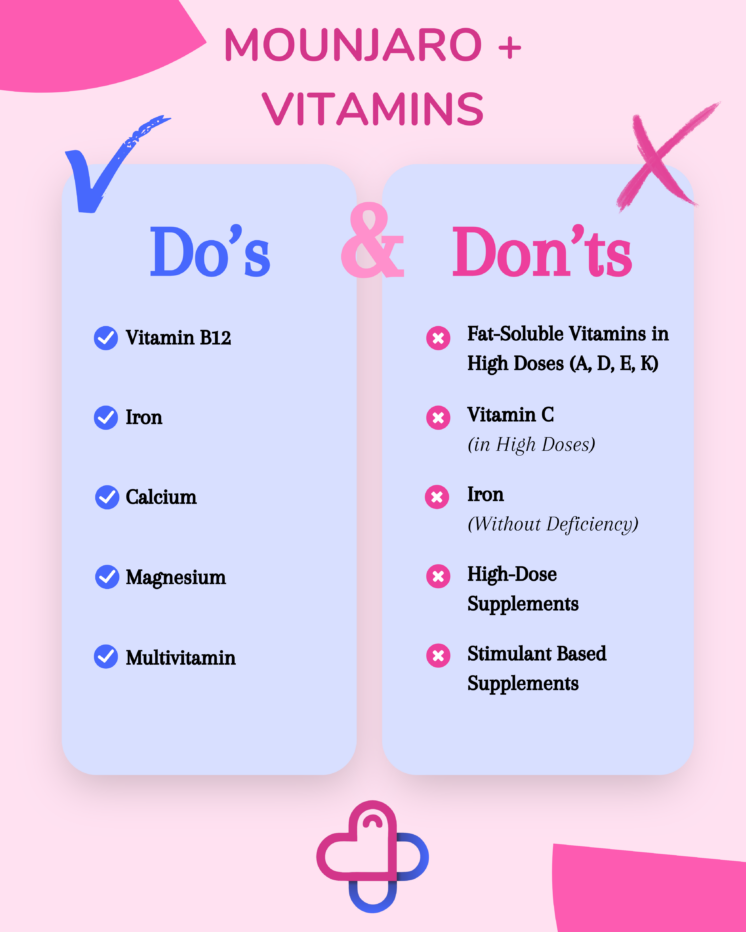
When taking Mounjaro (tirzepatide), your body’s nutritional needs may change slightly, especially if your appetite decreases or you’re eating less.
While most people don’t need special supplements, some vitamins can help support overall health and energy levels.
In this article, we’ll cover which supplements may be helpful, which ones to focus on, and how to use them safely alongside Mounjaro.
Vitamins to take on Mounjaro
Some people may consider supplementing with certain vitamins and minerals, as low levels can cause side effects and may make common Mounjaro-related issues worse.
It’s important to note that supplements should only be taken if a deficiency is confirmed or advised by a healthcare professional, and they should never replace a balanced diet.
Some of the key vitamins and minerals include:
Vitamin B12
- Role: Supports energy production and nerve health.
- Why it helps with Mounjaro: Can maintain energy even when appetite is reduced.
- Low-level symptoms: Fatigue, weakness, tingling in hands or feet.
Iron
- Role: Important for red blood cell production.
- Why it helps with Mounjaro: Helps prevent tiredness and shortness of breath during appetite changes.
- Low-level symptoms: Fatigue, pale skin, shortness of breath.
Calcium
- Role: Works with vitamin D for strong bones.
- Why it helps with Mounjaro: Maintains bone and muscle strength during weight loss.
- Low-level symptoms: Muscle cramps, brittle nails, bone fragility.
Magnesium
- Role: Supports muscle and nerve function, and energy metabolism.
- Why it helps with Mounjaro: Reduces risk of cramps, fatigue, or irritability when food intake is lower.
- Low-level symptoms: Muscle cramps, irritability, fatigue.
Multivitamin
- Role: Provides general nutritional coverage if diet is limited.
- Why it helps with Mounjaro: Helps prevent overall fatigue, weak immunity, and sluggish recovery during appetite changes.
- Low-level symptoms: Fatigue, poor immunity, slow recovery.
Weight Loss Service
Start your weight loss journey with professional support from Chemist Click
Check Eligibility
Cautions
While supplements can be helpful, they should be used carefully alongside Mounjaro, as this medication affects digestion and appetite.
| Caution Area |
Why It Matters with Mounjaro |
Practical Advice |
| High-dose supplements |
Large doses can increase nausea, stomach pain, constipation, or diarrhoea, which may overlap with Mounjaro side effects |
Only take supplements if advised or if a deficiency is confirmed |
| Digestive side effects |
Supplements like iron, magnesium, fibre, and vitamin C can worsen GI symptoms when started too quickly |
Start low, increase slowly, and stop if symptoms worsen |
| Starting multiple supplements |
Makes it hard to identify what’s causing side effects |
Introduce one supplement at a time |
| Herbal or “weight-loss” products |
May contain stimulants or unregulated ingredients that increase nausea, anxiety, or heart rate |
Best avoided unless specifically advised |
| Timing of supplements |
Taking supplements on an empty stomach can worsen nausea |
Take supplements with food where possible |
| Replacing food with supplements |
Supplements don’t provide full nutrition |
Use supplements to support, not replace, a balanced diet |
| Ongoing or worsening symptoms |
Persistent symptoms may signal intolerance or interaction |
Stop the supplement and seek advice from a pharmacist or prescriber |
When taking Mounjaro, supplements should be used thoughtfully and only when there’s a clear need – they’re there to support, not replace, good nutrition.
For most people, the biggest impact comes from what you eat day to day, so pairing sensible supplement use with a balanced eating plan is key.
You can learn more about this in our guide, Mounjaro Diet Plan: What to Eat?, which explains how to meet your nutritional needs through food first.