If you’re taking Mounjaro (tirzepatide) and have noticed an increase in burping, you’re not alone.
These burps can be uncomfortable and embarrassing, but they’re usually linked to how your digestive system reacts to the medication.
In this guide, we’ll explore the common causes and share practical tips to reduce or prevent them, so you can stay comfortable while on your treatment.
Sulphur burps are burps that smell like rotten eggs, often leaving an unpleasant taste in the mouth, and are generally a common, harmless digestive issue.
Sulphur burps are caused when the medication slows down your digestion.
When food moves more slowly through your stomach and intestines, it gives bacteria more time to break it down, producing hydrogen sulphide gas, which is what causes that eggy smell.
Certain foods can make it worse, like:
Eating too quickly, skipping meals, or taking supplements can also add to the problem.
It’s usually not dangerous, but it can be uncomfortable and a little embarrassing, which is why understanding the cause is the first step in managing it.
The good news is that sulphur burps usually don’t last forever.
For most people, these “eggy burps” appear early in treatment, often in the first few days or weeks as your body adjusts to Mounjaro, and then gradually improve.
How long they last can depend on factors like your diet, meal timing, and how quickly your stomach empties. Some people notice the burps fade after a few weeks, while others may experience them occasionally for a bit longer.
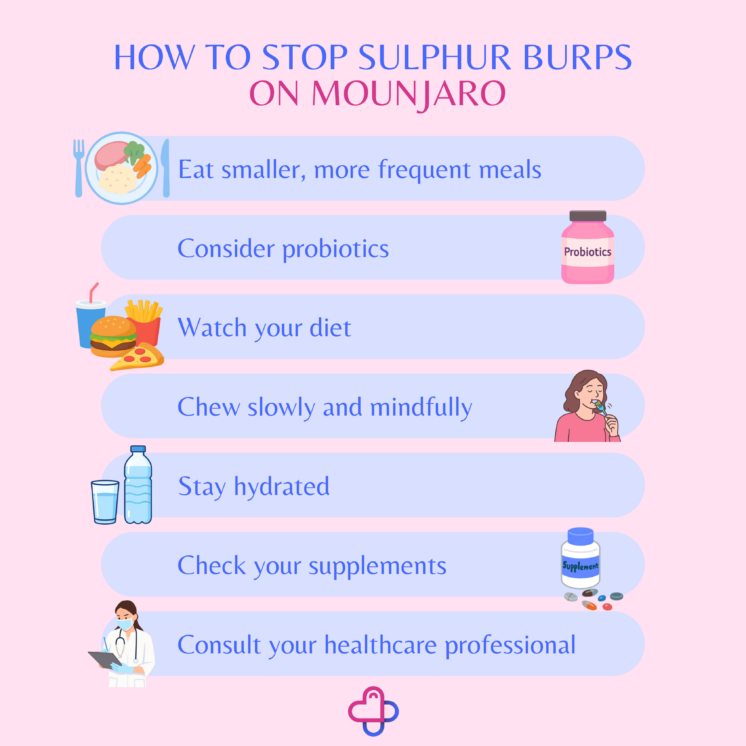
Eating large meals can overwhelm your digestive system, especially when Mounjaro is slowing stomach emptying. By splitting your food into smaller portions throughout the day, you make it easier for your stomach to break down food, which reduces gas formation and the chances of sulphur burps.
Mounjaro can temporarily change the balance of bacteria in your gut. Probiotics, found in yoghurts or supplements, can help restore a healthy gut flora balance, which may lower the production of smelly gases that cause sulphur burps.
Some foods naturally produce more gas when digested, particularly those high in sulphur, like eggs, beans, broccoli, cabbage, and cauliflower. Temporarily limiting these foods or pairing them with easy-to-digest options can help cut them down.
When you eat quickly, you swallow extra air, which can increase bloating and burping. Chewing food thoroughly and eating at a relaxed pace allows your stomach and intestines to process food more efficiently, which can reduce both the smell and frequency of burps.
Water helps food move smoothly through your digestive system. Drinking enough throughout the day, rather than large amounts all at once prevents food from lingering in the stomach, reducing fermentation by bacteria and decreasing sulphur gas production.
Certain supplements, particularly iron, high-protein powders, or sulphur-containing vitamins, can make burps worse. Talk to your pharmacist about adjusting timing, switching formulations, or reducing doses to see if it helps.
Sulphur burps can be an uncomfortable but common digestive side effect when starting your treatment, and they often settle as your body adjusts.
However, persistent or severe digestive symptoms shouldn’t be ignored. It’s important to recognise when burping might be a sign that something else is going on and needs professional input.
You should speak to a pharmacist or doctor if sulphur burps are ongoing, worsening, or accompanied by other symptoms that suggest irritation or digestive distress.
These symptoms don’t automatically mean something serious is happening, but they are a good reason to get checked early so you can stay safe and comfortable while continuing treatment.
Sulphur burps on Mounjaro usually improve by eating smaller meals, limiting high-sulphur foods, like eggs and broccoli, chewing slowly, and staying hydrated – all of which help digestion move more smoothly and reduce gas build up. If they persist or feel severe, it’s worth speaking to a pharmacist or doctor.
Mounjaro can cause sulphur burps because it slows how quickly your stomach empties, giving gut bacteria more time to break food down and produce hydrogen sulphide gas. This is a side effect of the medication’s action on digestion and often settles as your body adjusts.
Whilst all of our content is written and reviewed by healthcare professionals, it is not intended to be substituted for or used as medical advice. If you have any questions or concerns about your health, please speak to your doctor.