Retatrutide and Mounjaro are both next-generation weight-loss injections that can also help improve blood sugar control, but they work in slightly different ways.

Mounjaro is already approved and widely prescribed, acting on two metabolic hormones. Retatrutide, on the other hand, is still being studied in clinical trials and works by targeting three hormones involved in appetite, metabolism, and energy balance.

Understanding how these medications work, their potential results, and what we know so far about their safety can help clarify the key differences between them.

Quick Comparison Overview

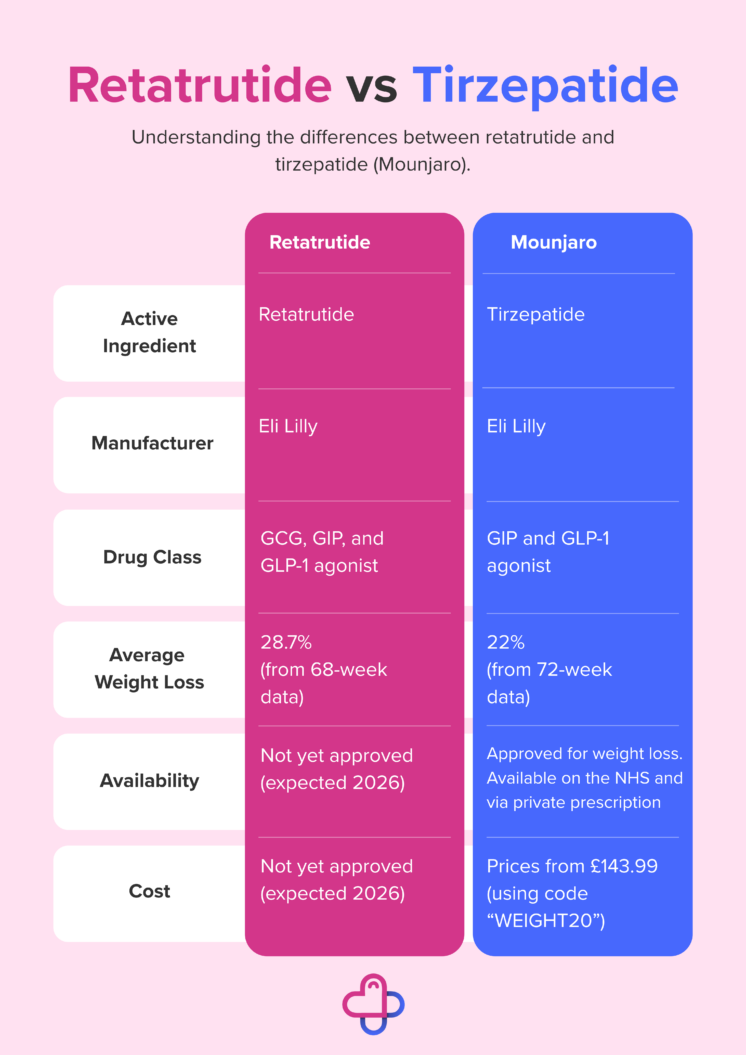
Here’s a summary of the key points you need to know about the difference between Mounjaro and retatrutide: 

Retatrutide vs Mounjaro

Is retatrutide the same as Mounjaro?

No, retatrutide is not the same as Mounjaro, although the two medicines are closely related and are both being studied for weight loss and type 2 diabetes.

Mounjaro (tirzepatide) works by targeting two hormones that help control appetite and blood sugar: GLP-1 and GIP. This is why it is often described as a dual-agonist treatment.

Retatrutide works slightly differently. It targets three hormones; GLP-1, GIP, and glucagon, which influence appetite, blood sugar levels, and how the body uses energy. Because it acts on three pathways, it is sometimes referred to as a “triple-agonist.”

Another important difference is availability. Mounjaro is already approved and available in the UK, while retatrutide is still undergoing clinical trials and has not yet been authorised for use. Researchers are continuing to study its safety, dosing, and effectiveness before it can be approved by regulators.

Mounjaro

Start your weight loss journey with Mounjaro

Check Eligibility
Rated Excellent
Trustpilot Icon

Retatrutide vs Mounjaro: Mechanism of action

The main difference between retatrutide and Mounjaro lies in how many metabolic hormones they target and how those hormones affect the body.

Mounjaro (tirzepatide) works by activating two hormones involved in appetite and blood sugar regulation:

  • GLP-1: Helps reduce appetite and slows stomach emptying
  • GIP: Enhances insulin release after eating and may help improve how the body processes nutrients and stores fat.

Retatrutide works on three hormones, which is why it is often referred to as a “triple-agonist.” It activates:

  • GLP-1: Reduces appetite and slows digestion
  • GIP: Improves insulin release and metabolic regulation
  • Glucagon: Increases energy expenditure and may help the body burn more stored fat

The addition of glucagon is what makes retatrutide different. While glucagon normally raises blood sugar, in this context it also stimulates energy use and fat metabolism, which researchers believe may contribute to the greater weight loss seen in clinical trials so far.

Retatrutide vs Mounjaro: Results

Retatrutide and Mounjaro appear to have similar side effects, mainly because both medications activate the GLP-1 hormone pathway, which affects digestion and appetite. However, because retatrutide also targets an additional hormone (glucagon), some effects may differ slightly.

Common side effects

In clinical trials so far, the most frequently reported side effects for both medications are related to the digestive system. These include:

  • Nausea
  • Diarrhoea
  • Vomiting
  • Constipation
  • Stomach discomfort or bloating
  • Reduced appetite

These symptoms usually occur when starting treatment or increasing the dose, and often improve as the body adjusts.

Side effects seen with Mounjaro

Because Mounjaro is already approved and widely used, its side-effect profile is better understood. The most common issues include:

  • Nausea and digestive upset
  • Reduced appetite
  • Constipation
  • Occasional fatigue

More serious side effects are uncommon but can include pancreatitis, gallbladder problems, or low blood sugar when used with certain diabetes medications.

Further reading: Mounjaro side effects

Side effects seen with retatrutide in trials

Retatrutide is still being studied, so researchers are still building a full picture of its safety. However, clinical trials have reported:

  • Similar gastrointestinal symptoms to other GLP-1 medications
  • Higher rates of nausea at higher doses
  • Increased heart rate in some participants
  • Temporary hair shedding reported in some people, which is thought to be linked to rapid weight loss rather than the medication itself

We can expect the side effects of retatrutide and Mounjaro to be very similar, given they work on the same pathways.

However, retatrutide also activates the glucagon pathway, so researchers are continuing to monitor potential effects on heart rate and metabolism in longer-term studies.

Further reading: Retatrutide side effects

Retatrutid evs Mounjaro: Availability and access

Mounjaro is already approved in the UK and is widely available with a prescription. It is licensed for the treatment of type 2 diabetes and can also be prescribed for weight management in appropriate patients. In practice, this means it can be obtained through a doctor, specialist weight-loss clinic, or a regulated online pharmacy such as Chemist Click, following a medical consultation.

Retatrutide, however, is still an investigational medication. It is currently undergoing late-stage clinical trials to assess its safety, effectiveness, and optimal dosing. Because it has not yet been authorised by the UK regulator, the Medicines and Healthcare products Regulatory Agency (MHRA), it cannot legally be prescribed or sold in the UK.

Further reading: How to get retatrutide in the UK

The verdict, which is better. Retatrutide or Mounjaro?

Right now, it’s too early to say that retatrutide is definitively better than Mounjaro.

Mounjaro is already approved, widely prescribed, and has a well-established safety profile. It has been studied in large clinical trials and is currently one of the most effective weight-loss medications available.

Retatrutide, on the other hand, has shown extremely promising results in early clinical trials, with even greater average weight loss reported in some studies. However, it is still being researched, and more data is needed to fully understand its long-term safety, dosing, and effectiveness.

Frequently Asked Questions

There isn’t a simple yes or no answer.

Early studies suggest retatrutide may lead to greater average weight loss, but it’s still being tested and hasn’t been approved yet. Mounjaro is already licensed and has more established safety and longer-term data.

Because the results come from different clinical trials, we can’t directly compare them or say one is definitely “better”, it depends on safety, approval status, and what’s suitable for the individual.

Right now, you can’t switch from Mounjaro to retatrutide.

Retatrutide is still being tested in clinical trials and hasn’t been approved, so it isn’t legally available outside of research studies.

Mounjaro is already approved and works on two hormones to help control appetite and blood sugar. Retatrutide works on three hormones, including glucagon, which helps to use fat for energy.

No, you should not take retatrutide and Mounjaro together. 

Whilst all of our content is written and reviewed by healthcare professionals, it is not intended to be substituted for or used as medical advice. If you have any questions or concerns about your health, please speak to your doctor.

Share