Orforglipron is an oral GLP-1 medicine undergoing clinical trials for weight loss and type 2 diabetes.

It is gaining significant interest because, unlike Mounjaro, it is taken as a tablet rather than an injection, which may make it a more attractive option for people who dislike needles or want a simpler daily treatment.

So far, clinical trials have shown promising results, with earlier studies reporting average weight loss of up to 14.7% at 36 weeks.

This article walks you through the most common side effects of orforglipron, how to spot anything serious, and practical tips for managing side effects.

Weight Loss Treatment

Lose up to 23% of your starting weight

Check Eligibility
Rated Excellent
Trustpilot Icon

What is orforglipron and how does it work?

Orforglipron is a once-daily tablet being developed for weight loss and type 2 diabetes. It belongs to the same broad family as GLP-1 medicines such as Mounjaro, but the big difference is that it is taken by mouth rather than injected.

Orforglipron is still being studied and is not yet approved for general use.

Orforglipron works by mimicking the effects of the natural GLP-1 hormone. This hormone helps control appetite, fullness, blood sugar and digestion. When the GLP-1 pathway is activated, people often feel less hungry, get full sooner, and may stay full for longer because the stomach empties more slowly. It also helps the body release more insulin when blood sugar is high, which is why it is being studied for diabetes as well as weight loss.

Common side effects of orforglipron

Orforglipron Side Effects

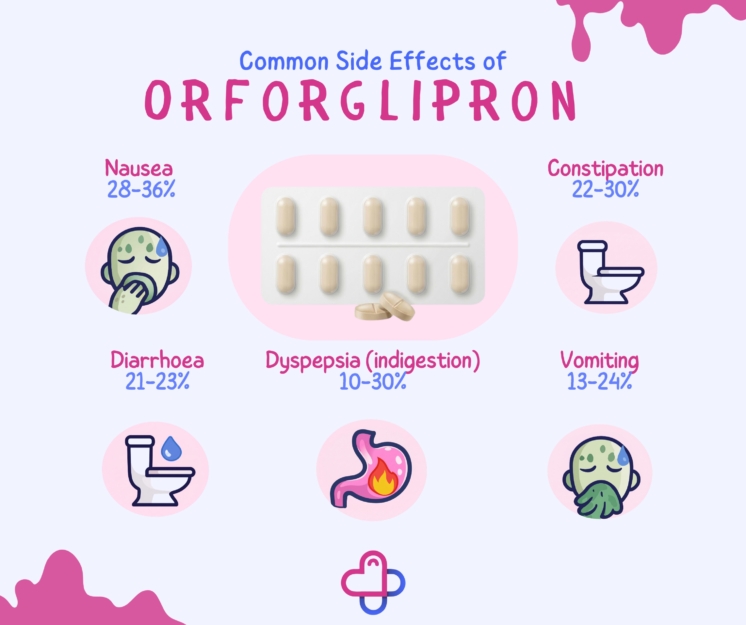
Below are the most commonly reported side effects of orforglipron seen in clinical trials, primarily gastrointestinal, along with approximate percentages of users affected.

  • Nausea: 28–36%
  • Constipation: 22–30%
  • Diarrhoea: 21–23%
  • Vomiting: 13–24%
  • Dyspepsia (indigestion): 13–16%

Because Orforglipron is still being studied, these numbers come from large clinical trials where people took the medication daily at different doses and were watched for side effects over several months.

Other potential side effects

Besides the common stomach-related side effects, a few people in trials experienced other, less common or less well-known side effects.

  • Heart rate increase: Some studies found that people taking Orforglipron had a slight increase in heart rate compared with those not taking it.
  • Hypoglycemia (low blood sugar): A few people experienced low blood sugar, especially those with diabetes who were also taking other medications to lower their blood sugar.
  • Gallbladder issues: Although uncommon, some people taking GLP‑1 medications have had gallbladder problems, such as pain or gallstones, and researchers continue to keep an eye on this.
  • Headache or dizziness: A small number of people in trials or reports said they experienced headaches or felt dizzy.
  • Allergic reactions: Uncommon but possible with any medication; signs include rash, itching, or swelling.

Why does orforglipron cause side effects?

Orforglipron causes side effects for the same basic reason that it works: it copies the action of the GLP-1 hormone.

GLP-1 helps control appetite, slows stomach emptying and affects how the body handles blood sugar. Because of that, the most common side effects in clinical trials were stomach and gut-related, such as nausea, diarrhoea, vomiting, constipation and indigestion.

In simple terms, the medicine changes how quickly food moves through your digestive system and how full you feel, which is helpful for weight loss, but can also upset the stomach, especially when treatment starts or the dose goes up.

When do orforglipron side effects start?

Orforglipron side effects usually start early in treatment, especially when you first start taking it, or when the dose is increased.

This is because it takes time for your body to adjust to the medicine and its effects on appetite and digestion. This early pattern is common with all GLP-1 medicines.

In the phase 2 trial, side effects were most noticeable during the dose-escalation period, when the dose was being gradually increased. This is important because it suggests many side effects are linked to the body adapting to treatment rather than the treatment itself.

How long do orforglipron side effects last?

For most people, side effects do not last forever. They are often worse at the start of treatment, improving as the body adjusts.

Across clinical trial reporting, the most common side effects were mainly mild to moderate, which supports the idea that they are often manageable and temporary rather than severe and long-lasting.

The published trial data do not always give a simple “average number of days” for how long each symptom lasts, so it would not be accurate to claim an exact timeframe for everyone.

What the evidence does show is that gut-related side effects are most linked to starting treatment and dose increases. In practice, that means symptoms such as nausea or diarrhoea often settle over days to a few weeks, although some people may continue to get symptoms for longer, particularly at higher doses.

When should you seek medical attention?

Most orforglipron side effects seen in trials have been digestive and mild to moderate, but some symptoms should never be ignored.

You should seek urgent medical attention if you develop severe abdominal pain that does not go away, especially if it spreads to your back or happens with vomiting, because this can be a warning sign of pancreatitis.

You should also get medical help if you develop possible signs of gallbladder problems, such as pain in the upper abdomen, fever, yellowing of the skin or eyes, or pale stools.

These warnings are well recognised across the GLP-1 class and are included in Lilly safety communications for related medicines.

Orforglipron and pancreatitis

Although Orforglipron hasn’t caused many cases of pancreatitis in studies, drugs in the same family (GLP‑1 medicines) can rarely affect the pancreas.

Pancreatitis is inflammation of the pancreas, which can cause severe stomach pain that may spread to the back, along with nausea or vomiting.

How to manage side effects

Orforglipron is still being studied, so researchers are still learning about all the possible side effects.

Knowing what to watch for ahead of time can help you feel more prepared and stay safe.

Here are some simple ways to manage them:

  • Start slowly: Your doctor might have you begin with a lower dose and increase it gradually so your body can adjust.
  • Snack smart: Try eating smaller amounts more often instead of big meals to ease stomach upset.
  • Drink plenty of water: Staying hydrated can help with constipation and overall wellbeing.
  • Keep track of how you feel: Write down any side effects and when they happen. This helps your clinician give the best advice.
  • Talk to your doctor: If side effects are strong, don’t go away, or feel unusual, contact your doctor right away.

Most side effects are mild and go away over time, but being careful and paying attention can help you stay safe while taking Orforglipron.

Key things to consider

It’s important to keep a few points in mind:

  • It’s still being studied: Researchers are still learning about all the possible side effects and long-term effects, so it’s important to stay informed.
  • Side effects are common at first: Nausea, constipation, or headaches can happen, especially when you start or increase your dose. Most are mild and improve over time.
  • Timing matters: Orforglipron should be taken at the same time each day and follow your doctor’s instructions about food. This can help the medication work better and reduce stomach discomfort.
  • Stay alert: Severe stomach pain, signs of pancreatitis, or allergic reactions need immediate medical attention.

Frequently Asked Questions

Based on clinical studies so far, Orforglipron pills may cause side effects that are generally less severe than injectable GLP‑1 medications, especially for nausea and digestive issues. However, these findings are still being studied, and individual experiences can vary.

Orforglipron appears to be generally safe, but it is still being studied. Like all medications, it can cause side effects.

In clinical studies, people started to see weight loss from Orforglipron within a few weeks, with more noticeable results over several months

Based on current clinical studies, Orforglipron pills may cause side effects that are generally milder than injectable GLP‑1 medications. However, research is ongoing.


Whilst all of our content is written and reviewed by healthcare professionals, it is not intended to be substituted for or used as medical advice. If you have any questions or concerns about your health, please speak to your doctor.

Share