Feeling cold while taking Mounjaro can be surprising, especially if you weren’t expecting it. While it’s not uncommon, there are clear reasons why it happens and simple steps you can take to stay comfortable. 

Does Mounjaro make you cold?

Some people taking Mounjaro (tirzepatide) notice that they feel colder than usual, especially in their hands, feet, or when sitting still. While this isn’t listed as a formal side effect in the medication leaflet, it’s a commonly reported experience among people who are actively losing weight.

Feeling cold on Mounjaro is usually not a sign that something is wrong. Instead, it tends to reflect how your body is adapting to changes in weight, metabolism, and energy use.

Let’s break down what’s happening.

Mounjaro

Start your weight loss journey with Mounjaro

Check Eligibility
Rated Excellent
Trustpilot Icon

Why does Mounjaro make you cold?

There are a number of reasons why this is happening, including:

Reduced body insulation

One of the main goals of Mounjaro is weight loss. As body fat decreases — particularly the layer of fat just under the skin — you lose some of your body’s natural insulation. Fat acts like a thermal blanket that helps retain heat. With less insulation, heat escapes more easily, which can make you feel chilly even in environments that previously felt comfortable.

Lower calorie intake = less heat production

Mounjaro reduces appetite, which naturally leads to eating fewer calories. Digestion and metabolism generate heat, this is sometimes called the “thermic effect” of food.

When you eat less:

  • Your metabolic heat production drops
  • Your body becomes more energy-efficient
  • You may feel colder, especially between meals

This is a normal adaptation when your body is operating in a calorie deficit.

Changes in how your body regulates temperature

Mounjaro works on hormone pathways that influence appetite, insulin signalling, and energy balance. These same systems are closely connected to the brain’s temperature regulation centre.

As your metabolism shifts during weight loss, your internal “thermostat” may temporarily adjust. Some people interpret this as feeling unusually sensitive to cold, even when room temperature hasn’t changed.

Reduced circulation to hands and feet

When calorie intake drops, your body prioritises maintaining core temperature and vital organs. One way it conserves heat is by slightly reducing blood flow to the extremities.

This can lead to:

  • Cold hands
  • Cold feet
  • Feeling chilly when inactive

It’s a protective response rather than a harmful one.

Blood sugar dips

If your blood sugar falls lower than usual, particularly in people also taking other glucose-lowering medications.

You may experience symptoms such as:

  • Cold sweats
  • Shivering
  • Light-headedness

This is less common when Mounjaro is used alone, but it’s something to be aware of.

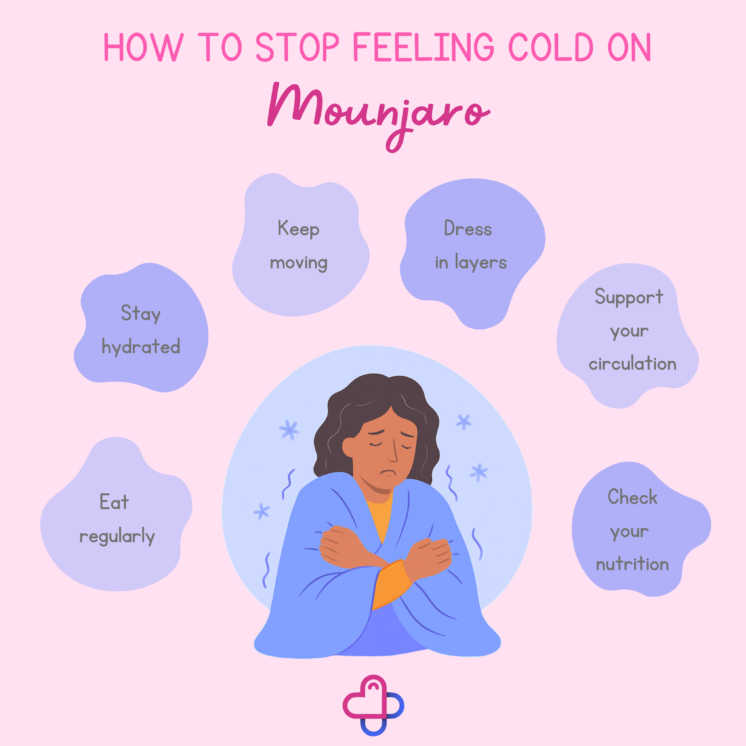
How to stop feeling cold on Mounjaro

While you can’t always change how your body’s “internal boiler” reacts to the medication, you can certainly help it keep the heat in.

Eat regularly, even if portions are smaller

Your body relies on food to generate heat. Try not to skip meals, and focus on balanced foods with protein, healthy fats, and complex carbohydrates to support steady energy and warmth.

Stay well hydrated

Dehydration can affect circulation and make you feel colder. Sip fluids throughout the day, even if your appetite is reduced.

Keep moving

Light activity like walking or stretching boosts circulation and helps your body produce heat. Even short bursts of movement can warm your hands and feet.

Dress in layers

It sounds simple but layering traps heat more effectively than one thick item. Warm socks, slippers, or fingerless gloves can make a big difference if your extremities feel cold.

Support your circulation

Warm drinks, gentle hand and foot massages, or a warm shower can encourage blood flow and provide quick relief.

Check your nutrition

Rapid weight loss or reduced food intake can sometimes mean you’re missing key nutrients like iron or B vitamins, which play a role in energy and temperature regulation.

When to get medical advice

Feeling a little colder than usual while taking Mounjaro is typically harmless and part of how your body adapts to eating less and losing weight. For most people, it improves over time.

However, you should speak to a clinician if your cold sensitivity feels severe, persistent, or unusual, or if it happens alongside other symptoms.

Seek advice if you notice:

  • Extreme or worsening fatigue
  • Dizziness or light headedness
  • Pale skin or shortness of breath
  • Hair thinning or brittle nails
  • Ongoing weakness
  • Feeling cold all the time, even in warm environments

These symptoms could point to issues such as nutrient deficiencies, thyroid imbalance, anaemia, or other unrelated conditions, all of which are treatable once identified.

Trust your instincts: if something doesn’t feel right, it’s always worth checking in. Your clinician can review your symptoms, nutrition, and overall health to make sure your body is adjusting safely and comfortably.

Bottom line

Mounjaro chills are normal. In fact, it is a sign that your body is changing; losing insulation, using energy differently, and adjusting to weight loss. While it can feel unusual, it’s generally harmless and temporary.

If symptoms feel extreme or worrying, a quick check-in with your healthcare provider can provide reassurance.

Frequently Asked Questions

It can. Your body naturally focuses on keeping your vital organs warm and working properly. To do this, it may send a little less blood to your hands and feet to conserve heat, which can make them feel colder than usual. This is a normal protective response, not a sign that something is wrong.

No, it’s simply a side effect of weight loss and metabolic adaptation. It tends to stabilise as your body adjusts to its new weight and energy balance.

Whilst all of our content is written and reviewed by healthcare professionals, it is not intended to be substituted for or used as medical advice. If you have any questions or concerns about your health, please speak to your doctor.

Share