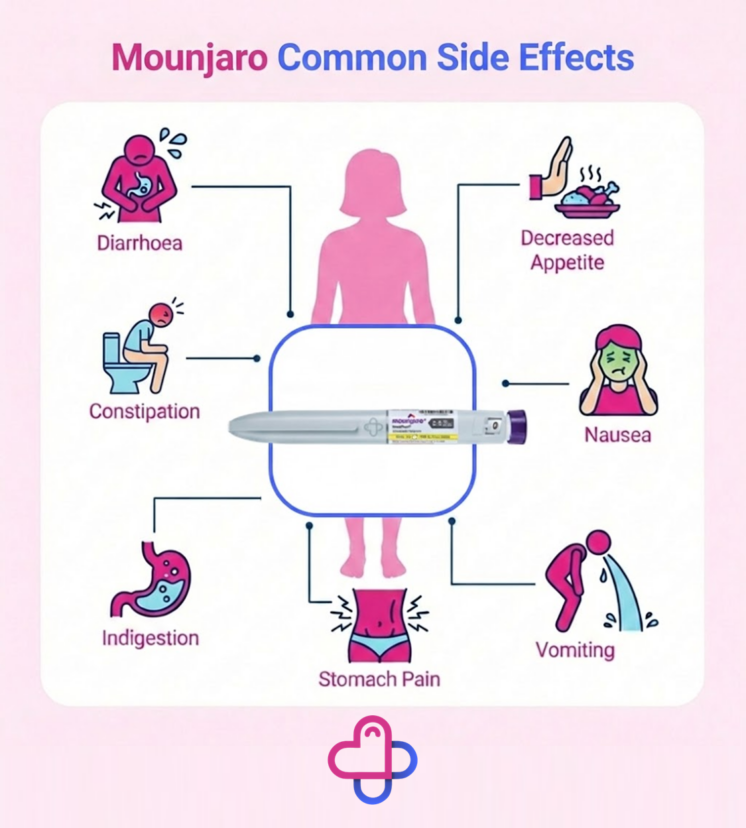
Diarrhoea
How many people does it affect: Up to 23% of users. Most cases appear during dose increases and ease with time.
Why it happens: Mounjaro slows and alters gut movement and stomach emptying, which can change how your intestines handle food and fluids, especially when your appetite and portion sizes are shifting.
What to do:
- Sip fluids regularly; add oral rehydration if stools are frequent
- Go lighter on fatty/spicy foods; consider smaller, simpler meals for a few days
- Avoid sugar alcohols (e.g., sorbitol) and heavy caffeine
- If persistent, ask your clinician about short-term loperamide and whether to pause/increase the dose more slowly.
Nausea (Feeling sick)
How many people does it affect: Up to 33% of users; usually mild–moderate and improves after a few weeks at a steady dose.
Why it happens: Mounjaro delays gastric emptying and reduces appetite; a “full” feeling can trigger queasiness during dose steps.
What helps:
- Small, low-fat meals; avoid big portions, especially on injection day
- Ginger/peppermint, regular hydration, slow eating
- If needed, ask about a short course of anti-nausea medication or raising the dose at a slower pace
Vomiting
How many people does it affect: Up to 13% of users; peaks during a dose increase then subsides.
Why it happens: Slower stomach emptying plus large/fatty meals can overwhelm the stomach early on
What helps:
- Pause eating briefly; re-introduce sips of water/electrolytes
- Stick to light foods (e.g., toast, rice) for 24-48h
- Speak to your clinician about anti-emetics and holding the dose increase; seek help urgently if you cannot keep fluids down
Constipation
How many people does it affect: Up to 17% of users; peaks during a dose increase then subsides.
Why it happens: Slowed stomach emptying together with smaller, low-fat meals can reduce natural stool-stimulating signals.
What helps:
- Fluids and fibre (wholegrains, vegetables; add psyllium if needed)
- Move daily (even short walks)
- Consider an osmotic laxative (e.g., macrogol) short-term after checking with your clinician
- If ongoing, ask about moving up to the next dose more gradually
Bloated stomach
How many people does it affect: Up to 4% of users.
Why it happens: Slower gastric emptying and more gas from dietary changes can cause fullness/bloat, especially early on.
What helps:
- Smaller meals; avoid carbonated drinks/beans for a few days.
- Gentle walking after meals; try peppermint tea or simethicone.
- Rule out constipation or reflux – treat those and bloat often settles
Sulphur burps
How many people does it affect: Up to 5% of users.
Why it happens: Slowed stomach emptying can lead to gas build-up; certain foods (e.g., eggs, onions, broccoli) release sulphur gases that smell like “rotten eggs.” Reflux can make burps more noticeable.
What helps:
- Temporarily cut-back on high-sulphur foods and carbonated drinks
- Eat slowly, avoid lying flat after meals
- If reflux dominates, ask your doctor about acid-suppressing medication such as omeprazole
- Ask about slower dose steps if burps are persistent
Further reading: Mounjaro sulphur burps
Headache and dizziness
How many people does it affect: Up to 5% of users.
Why it happens: Often dehydration, meal pattern changes, caffeine swings, or if you have diabetes, glucose changes during early weight loss.
What helps:
- Hydrate; don’t skip meals.
- Keep caffeine steady day-to-day.
- If you have diabetes, check glucose when headaches hit.
- Simple analgesia (e.g., paracetamol) if appropriate; speak to your clinician if persistent/worsening.
Tiredness and fatigue
How many people does it affect: Up to 7% of users.
Why it happens: Early calorie deficit, rapid weight loss, dehydration, and sleep changes can all contribute while your body adapts.
What helps:
- Prioritise protein, fluids, and regular meals.
- Keep electrolytes up if you’ve had GI upset.
- Aim for consistent sleep and light daily activity.
- Ask about holding/slowing the next dose step if fatigue is marked.