Black Friday [25% Off Erectile Dysfunction consultations] - CODE: "BFS25"
Weight Loss Programme - Start your transformation! - CODE: "WEIGHT20"
Black Friday Sale [15% off selected generic medications] - CODE: "BLACKFRIDAY15"
If you are taking Viagra for the first time, it is important to understand how to use it properly.
This guide explains how to take Viagra, the best way to take it, when to take it, how much you should take, and what first-time users can expect.
The best way to take Viagra is to use it correctly, at the right time, and under the right conditions.
Viagra contains the active ingredient Sildenafil, which increases blood flow to the penis, helping you get and maintain an erection when you are sexually aroused.
For first-time users, following these steps can make a big difference:
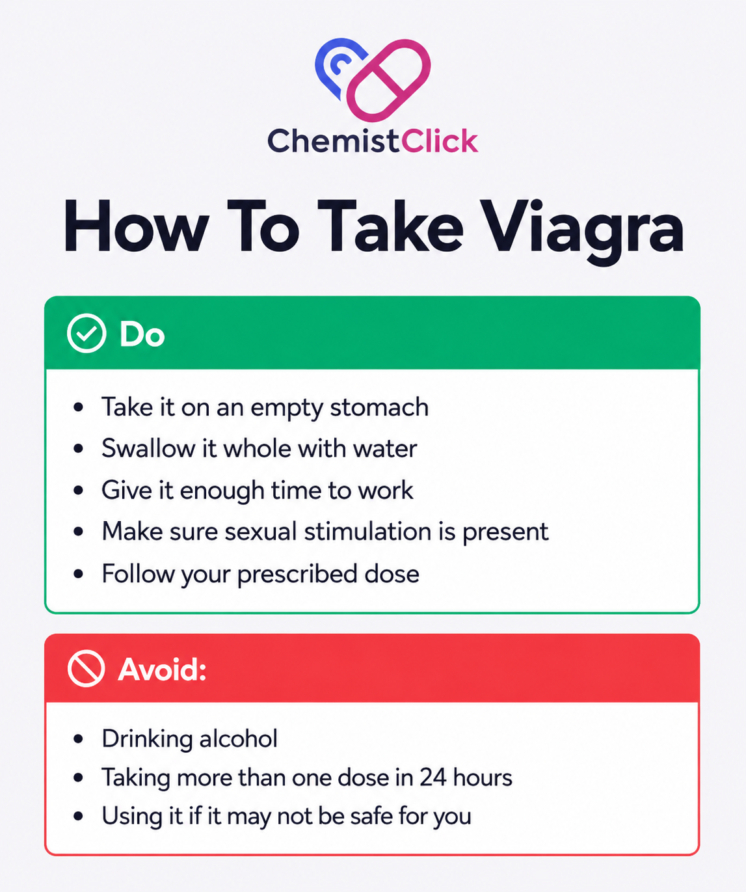
High-fat or heavy meals can delay absorption. Taking Viagra on an empty stomach or after a light meal helps it work faster.
Take the tablet whole with a glass of water. Do not split or chew it.
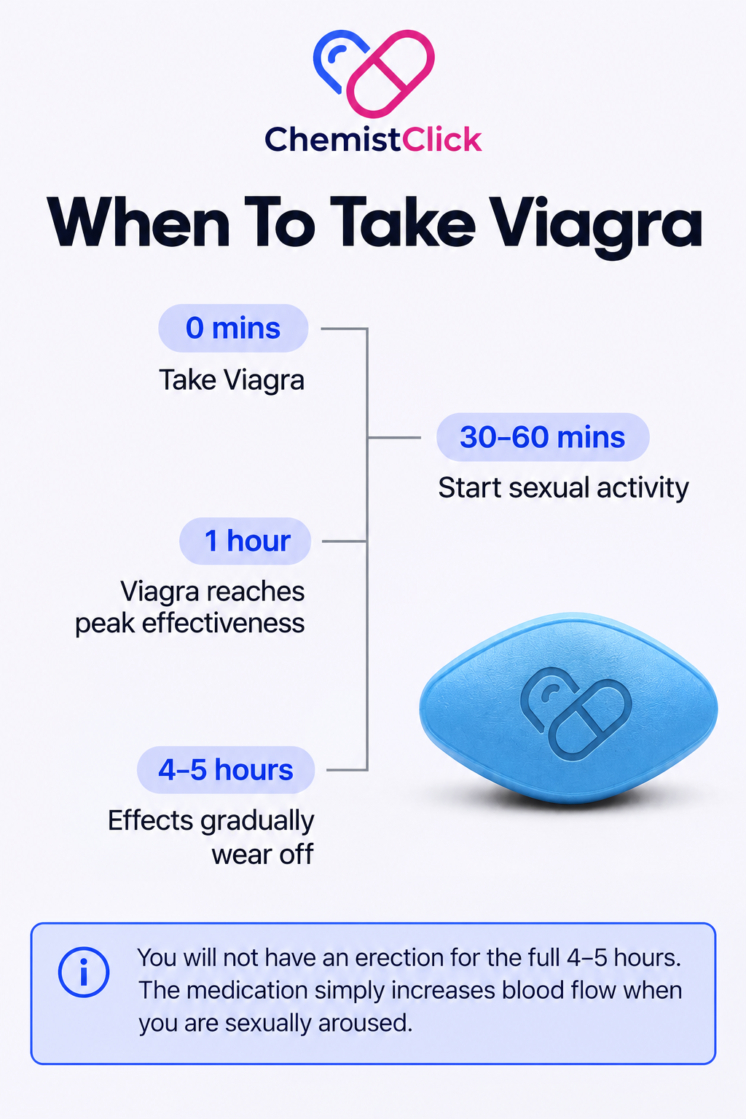
Viagra usually takes 30–60 minutes to become active. Some men notice effects sooner, while others take a little longer.
Alcohol reduces blood flow, lowers sensitivity, and increases the chance of side effects. It also makes erections harder to achieve.
Further reading: Viagra and Alcohol
Viagra will not cause an erection on its own. You must be sexually aroused for it to work.
Increasing the dose will not improve results and may increase the risk of side effects.
Avoid Viagra if you take nitrates, certain heart medications, or have certain medical conditions.
Always follow your prescriber’s advice.
The best time to take Viagra is 30–60 minutes before sexual activity.
This allows the medication time to reach peak levels in your bloodstream.
Further reading: How long does Viagra last & how long does it take to work?
Your body must absorb Viagra through your digestive system before it begins working.
How quickly this happens depends on:
Viagra reaches its peak effect at around 60 minutes, but you may get erections naturally for up to 4 hours after taking it.
How to optimise timing
If Viagra does not work after an hour, it may still work later within the 4-hour window.
Many men find that Viagra works the first time they take it, but this is not always the case.
It is common for first-time users to need several attempts before seeing the full benefit.
This can be due to:
Doctors recommend trying Viagra on 8 separate occasions before concluding that it does not work well for you.
If this is the case, do not worry, your dose can be increased.
There are also several Viagra alternatives that can be explored.
For most first-time users, the recommended starting dose is 50mg. This provides a good balance between effectiveness and tolerability.
However, the right dose depends on your age, general health, and any medications you are taking.
Viagra doses explained:
| Strength | Description | Who It’s Suitable For |
|---|---|---|
| 25 mg | Lowest dose | Older men, individuals with certain health conditions, or those taking interacting medicines |
| 50 mg | Standard starting dose | Works for most first-time users |
| 100 mg | Maximum dose | Used if 50 mg is not effective; only under medical supervision |
Important dose advice
Further reading: Viagra dosages explained
Most men can take Viagra safely without experiencing side effects.
If you do experience side effects, they are likely to be short-lived and mild. Common side effects of Viagra include:
Further reading: Viagra headaches explained
If side effects are bothering you, speak to your prescriber about trying a lower dose, or an alternative treatment.
You should make your prescriber aware of medication that you are taking or any medical conditions that you have. Certain medical conditions and medication can interact with Viagra, increasing the likelihood of experiencing side effects.
If you experience serious symptoms like chest pain, signs of an allergic reaction, sudden loss of vision or hearing, or an erection that lasts longer than 4 hours (priapism), seek emergency medical attention immediately.
When you take Viagra (Sildenafil), it encourages blood flow to the penis, helping you achieve and maintain an erection only when you are sexually aroused. It does not cause an erection by itself, nor does it increase sexual desire.
The best time to take Viagra is 30-60 minutes before sexual activity. This allows the medication to reach peak levels in your bloodstream.
Viagra works faster and more reliably when taken:
Once active, Viagra can help you achieve an erection for up to 4 hours, but you must still be sexually aroused for it to work.
When your husband takes Viagra, you can expect firmer, more reliable erections when he is sexually aroused. The medication typically starts working within 30-60 minutes, and its effects can last for up to four hours.
It’s important to remember that Viagra does not increase libido. Sexual stimulation is still required for it to work. It also does not delay ejaculation and is not designed to make someone last longer in bed.
Some men may experience mild side effects, such as headaches or facial flushing. If he feels nervous, reassure him that it can take a few attempts to get the best results – first-time performance anxiety is very common.
Yes, Viagra is safe for most men when prescribed by a qualified healthcare professional. Millions use it with no, or minimal side effects. However, it is not suitable for everyone.
Avoid Viagra if you take nitrates (used for chest pain), have severe heart or liver disease, very low blood pressure, or certain eye conditions.
Always complete a medical consultation to ensure it is safe for you and never combine Viagra with recreational drugs or unregulated supplements.
NHS. Erection problems (erectile dysfunction). NHS website. (Accessed: 24 November 2025). https://www.nhs.uk/conditions/erection-problems-erectile-dysfunction/
Whilst all of our content is written and reviewed by healthcare professionals, it is not intended to be substituted for or used as medical advice. If you have any questions or concerns about your health, please speak to your doctor.