
Discreet and confidential delivery

300,000+ trusted patients

No hidden fees

10,000+ 5* reviews


Acnecide 5% w/w Gel (Benzoyl Peroxide)
from
£13.50
Acnecide 5% w/w Gel (Benzoyl Peroxide)
Buy Acnecide gel
How to get Acnecide Gel online
- Complete a short online consultation about your skin, your health and any other treatments you use.
- Our pharmacist reviews your answers and decides whether Acnecide Gel is suitable for you.
- If approved, our pharmacy dispatches your order in discreet packaging.
Acnecide Gel Prices
| Name & Dosage | x1 Tube (s) |
x2 Tube (s) |
x3 Tube (s) |
|---|---|---|---|
| Acnecide Gel Tube (s) |
£13.50 | £26.00 | £37.50 |
Summary for Acnecide Gel
| Medication Class | Topical anti-acne treatment (benzoyl peroxide, an antiseptic, not an antibiotic) |
|---|---|
| Mechanism of action | Reduces the acne bacteria (Cutibacterium acnes) on the skin and helps the top layer of skin shed, which unblocks pores |
| Active ingredient | Benzoyl peroxide (as hydrous benzoyl peroxide) |
| Strength | 5% w/w gel |
| Product type | Leave-on gel. Not the same as Acnecide Wash Gel, which is rinsed off |
| Legal category | Pharmacy medicine (P) |
| Effective within | Usually starts to work within 4 weeks; the full effect can take 2 to 4 months |
| Dosage instructions | Apply a thin layer to the affected skin once or twice a day. Sensitive skin: once a day at bedtime to start |
| Maximum dose | Twice a day. Using more, or applying it more often, does not work better and can irritate the skin |
| Manufacturer | Galderma (U.K.) Limited |
| Use with alcohol | Drinking alcohol does not affect it. Avoid alcohol-based toners and astringents on treated skin, as they add to dryness and irritation |
About Acnecide Gel
Key points
- Acnecide Gel contains 5% benzoyl peroxide and is left on the skin, not washed off.
- It treats mild to moderate acne on the face, chest and back.
- Apply a thin layer once or twice a day to clean, dry skin.
- It usually starts to work within 4 weeks, and the full effect can take 2 to 4 months.
- Dry, red or peeling skin is common at first and usually settles if you use it less often.
What is Acnecide Gel used for?
Acnecide Gel is used to treat acne vulgaris, the common type of acne that causes blackheads, whiteheads and red or pus-filled spots. It can be used on the face, chest and back. We supply it online for mild to moderate acne. Severe acne, such as large, painful lumps under the skin or acne that is leaving scars, needs to be assessed by a GP.
How does benzoyl peroxide gel work?
Benzoyl peroxide works in two ways. It is an antiseptic that reduces the number of Cutibacterium acnes, the bacteria on the skin linked to inflamed spots, and it helps the top layer of skin shed, which helps clear blocked pores (blackheads and whiteheads). Because it is an antiseptic rather than an antibiotic, it can be used on its own or alongside other acne treatments if a doctor or pharmacist advises it.
How long does Acnecide Gel take to work?
Acnecide Gel usually starts to work within 4 weeks, but the full effect can take 2 to 4 months, so keep using it as directed. Your skin may be dry, red or peeling in the first few weeks. If your acne has not improved after 12 weeks, or it gets worse at any point, speak to our pharmacist or your GP.
Is Acnecide Gel a cream?
No. Acnecide is a gel, not a cream, although many people search for ‘Acnecide cream’. The gel is white to off-white and is applied in a thin layer that soaks into the skin.
What is the difference between Acnecide Gel and Acnecide Wash Gel?
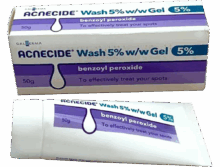
Both contain 5% benzoyl peroxide, but they are used differently. Acnecide Gel is a leave-on treatment: you apply a thin layer to clean skin and leave it to soak in. Acnecide Wash Gel is used like a face or body wash: you massage it into wet skin for 1 to 2 minutes and then rinse it off. Do not use both at the same time unless a pharmacist or doctor has advised it, as using two benzoyl peroxide products can increase dryness and irritation. Read more about Acnecide Wash Gel.
Is Acnecide Gel the same as Acnecide Face Gel?
They contain the same active ingredient at the same strength, but they are licensed differently. Acnecide 5% w/w Gel, sold on this page, is a pharmacy medicine that can be used on the face, chest and back. Acnecide Face Gel is a smaller 15g pack sold in shops and supermarkets for mild acne on the face, mainly blackheads and whiteheads, in people aged 12 and over.
Is Acnecide Gel good for acne?
Benzoyl peroxide is a long-established acne treatment. For mild to moderate acne, NICE recommends considering benzoyl peroxide on its own as an alternative when the first-choice combination treatments are not suitable, or if you would prefer to avoid a topical retinoid or an antibiotic. How well it works varies from person to person. If it has not helped after 12 weeks, other treatments are available, and our pharmacist or your GP can advise.
What are the alternatives to Acnecide Gel?
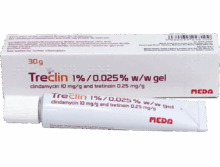
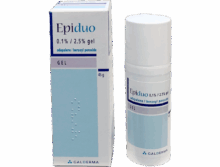
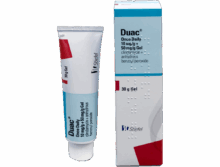
For mild to moderate acne, NICE guidance recommends a 12-week course of a prescription combination gel as a first option, containing adapalene with benzoyl peroxide (such as Epiduo gel), clindamycin with benzoyl peroxide (such as Duac gel), or clindamycin with tretinoin (such as Treclin gel). Combination gels that already contain benzoyl peroxide are used instead of Acnecide Gel, not as well as it. Your GP can advise whether a prescription treatment is right for you.
What else can help with acne?
- Wash affected skin no more than twice a day with a mild, non-alkaline cleanser and lukewarm water.
- Choose oil-free, non-comedogenic moisturisers, sunscreen and make-up, and remove make-up at the end of the day.
- Try not to pick or squeeze spots, as this can lead to scarring.
- If your acne is affecting your mood or confidence, speak to your GP. Support is available.
Acnecide Gel Dosage Instructions
How to use Acnecide Gel
Apply Acnecide Gel once or twice a day to all of the skin affected by acne, not just individual spots. If you have sensitive skin, start once a day at bedtime.
- Wash the affected skin gently with a mild cleanser and water, then pat it dry.
- Apply a thin layer of gel to all of the affected area.
- Wash your hands afterwards.
- Keep the gel away from your eyes, mouth, the creases of your nose, lips and any broken skin. If it gets in your eyes, rinse them well with water. Take extra care on the neck and other sensitive areas.
- If your skin becomes very dry, red or peeling, use it less often, or stop for a day or two until it settles, then start again.
- Avoid strong sunlight, sunbeds and sunlamps. If you cannot avoid the sun, use a sunscreen and cover up.
- Let the gel dry fully before your skin touches clothes, towels or bedding, as it can bleach hair and coloured fabrics.
Using more gel, or applying it more often, will not make it work faster and is more likely to irritate your skin. If you miss an application, do not worry: carry on as normal when you remember. If you have applied too much and your skin is irritated, wash off as much as you can and start again once the irritation settles. If anyone swallows the gel, get medical advice.
The leaflet suggests checking back with a pharmacist or doctor after a month of use. If your acne has not improved after 12 weeks, or gets worse, speak to our pharmacist or your GP.
When should you see a doctor instead?
We supply Acnecide Gel online for mild to moderate acne. See a GP instead of starting it online if you have:
- Large, painful lumps or cysts under the skin
- Acne that is leaving scars, or dark or light patches on the skin
- Acne that is making you feel very low, anxious or withdrawn
- Acne that started suddenly as an adult, or acne with irregular periods or extra hair growth on the face or body
- Acne that has not improved after two courses of treatment
- Red, hot, swollen or weeping skin, which may be infected
Acnecide Gel Side Effects
Acnecide Gel side effects
Like all medicines, Acnecide Gel can cause side effects, although not everybody gets them. Most are mild skin reactions where the gel is applied, and they usually get better if you use it less often or stop.
Very common (more than 1 in 10 people)
Dry skin, redness, peeling and a burning feeling. Redness can be harder to see on black or brown skin. These usually get better if you use the gel less often, for example once a day or every other day, or stop for a short time.
Common (up to 1 in 10 people)
Itching, pain or stinging, and irritated, sore skin (irritant contact dermatitis).
Uncommon (up to 1 in 100 people)
An allergic skin reaction (allergic contact dermatitis).
Stop using Acnecide Gel and call 999 or go to A&E if you have
- Signs of a serious allergic reaction, such as an itchy raised rash (hives), swelling of the face, eyes, lips, tongue or mouth, difficulty breathing, or feeling faint
Stop using it and speak to a pharmacist or doctor if you have
- Swelling or blistering of the skin
- Severe irritation, redness, itching or peeling
- Swelling of the face
Frequency not known
Swelling of the face, and allergic reactions, including reactions where the gel is applied and a serious allergic reaction (anaphylaxis).
Acnecide Gel is not expected to affect your ability to drive, cycle or use machinery. The gel contains propylene glycol, which may cause skin irritation. You can report side effects through the MHRA Yellow Card scheme (yellowcard.mhra.gov.uk).
Acnecide Gel Warnings
Who should not use Acnecide Gel?
Acnecide Gel is not suitable for everyone. Our pharmacist checks your answers against these points before deciding whether to supply it.
Do not use Acnecide Gel if you
- Are allergic to benzoyl peroxide or any of the other ingredients, including propylene glycol (see the leaflet for the full list)
- Want to apply it to broken or damaged skin, cuts or grazes
Tell our pharmacist first if you
- Use any other acne treatment, on the skin or by mouth, including prescription gels, antibiotics or isotretinoin
- Use products that dry or peel the skin, such as exfoliating scrubs, peels, or toners or astringents containing alcohol
- Have sensitive skin, eczema or another skin condition, or a skin infection
- Are pregnant, trying for a baby or breastfeeding
- Have any of the symptoms listed under ‘When should you see a doctor instead?’
Benzoyl peroxide makes the skin more sensitive to the sun, and it can bleach hair, eyebrows and coloured fabrics such as towels, clothes and pillowcases.
Acnecide Gel Interactions
Can you use Acnecide Gel with other acne treatments?
Acnecide Gel is applied to the skin, and no interactions with medicines taken by mouth are known. The main risk is extra dryness and irritation when it is used with other skin treatments. Always list everything you use in your consultation, including skincare products.
| Medicine or product | What it means |
| Other benzoyl peroxide products, such as Acnecide Wash Gel or prescription combination gels containing benzoyl peroxide | Using two benzoyl peroxide products adds to dryness and irritation. Only use them together if a pharmacist or doctor advises it |
| Topical retinoids, such as adapalene or tretinoin | Can add to irritation. Only use together if a doctor or pharmacist advises it |
| Topical antibiotics, such as clindamycin or erythromycin | Sometimes prescribed alongside benzoyl peroxide. Check with our pharmacist or your GP first |
| Salicylic acid, exfoliating acids, scrubs and peels | Can add to dryness and peeling. Avoid unless advised |
| Alcohol-based toners and astringents, medicated soaps | Can add to dryness and irritation. Use a mild cleanser instead |
| Lymecycline or doxycycline (antibiotic tablets for acne) | No known interaction. NICE advises that antibiotic tablets for acne should not be used on their own, and should be combined with a topical retinoid or benzoyl peroxide. Doxycycline can also make skin more sensitive to the sun |
| Co-cyprindiol and contraceptive pills | No known interaction. Acnecide Gel does not affect how the pill works |
| Isotretinoin capsules | Avoid using Acnecide Gel while taking isotretinoin, as it can increase skin irritation. Follow your specialist’s advice |
Can I use Acnecide Gel with lymecycline or doxycycline?
Yes, if your prescriber or pharmacist has advised it. There is no known interaction, and NICE advises that antibiotic tablets for acne should not be used on their own, but combined with a topical retinoid or benzoyl peroxide. Both benzoyl peroxide and doxycycline can make your skin more sensitive to the sun, so use sunscreen and avoid sunbeds.
Can I use Acnecide Gel with co-cyprindiol?
Yes. There is no known interaction between Acnecide Gel and co-cyprindiol, and benzoyl peroxide does not affect how the pill works. Tell our pharmacist about all the medicines you take in your consultation.
Acnecide Gel Pregnancy and breastfeeding
Can you use Acnecide Gel while pregnant?
Benzoyl peroxide can usually be used in pregnancy, but check first. It has been used for many years without known harm to the baby, but it should only be used in pregnancy if it is clearly needed. The leaflet advises not using it while pregnant unless your doctor has said you can, so tell our pharmacist if you are pregnant or trying for a baby, and tell your doctor if you become pregnant while using it.
Can you use Acnecide Gel while breastfeeding?
You may be able to use Acnecide Gel while breastfeeding, but check first, as it is not known whether it passes into breast milk. The leaflet advises not using it while breastfeeding unless your doctor has said you can. Do not apply it to your chest or breasts, so that your baby does not come into contact with it.
Frequently asked questions
Yes. Acnecide Gel can be used once or twice a day, so you can apply it in the morning, at night or both. If you have sensitive skin, start with once a day at bedtime. If you use it in the morning, use a sunscreen, as benzoyl peroxide makes the skin more sensitive to the sun.
Yes. Acnecide Gel is a leave-on gel, and applying it once a day at bedtime is the recommended way to start if you have sensitive skin. Let it dry before you go to bed and use an old or white pillowcase, as it can bleach fabrics.
Yes. Acnecide Gel is designed to be used every day, once or twice a day. If your skin gets very dry or irritated, use it less often until your skin settles.
Yes. Let the gel soak in and dry first, then use an oil-free, non-comedogenic moisturiser or make-up if you need to. A moisturiser can help with dryness. Remove make-up at the end of the day and before you apply the gel.
Skin bleaching is not listed as a side effect of Acnecide Gel. It can bleach hair, eyebrows and coloured fabrics such as towels, clothes and bedding, so keep it away from your hairline and let it dry before it touches fabric.
Purging is not described in the Acnecide Gel product information. Dryness, redness and peeling are very common in the first few weeks and usually settle. If your spots get noticeably worse, or your skin is very sore, stop using it and speak to our pharmacist or your GP.
Acnecide Gel is not used to treat acne scars or dark marks left by spots. Avoiding picking or squeezing spots can reduce the risk of scarring. If acne is scarring your skin, see a GP, as you may need a different treatment.
Yes. Acnecide Gel can be used on the face, chest and back. Let it dry before you get dressed, as it can bleach clothes. If you are breastfeeding, do not apply it to your chest.
There is no set limit. How long you use it depends on how your skin responds. If your acne has not improved after 12 weeks, or it gets worse, speak to our pharmacist or your GP.
Keep it out of the sight and reach of children, below 25°C, and do not freeze it. Keep the tube closed and away from direct heat.
Written and clinically reviewed by our pharmacists


Other options include:

Our Awards & Certifications
Our team of experienced pharmacists and healthcare professionals are dedicated to providing the highest level of care and service to every customer, ensuring that they receive the best possible healthcare experience.

Our Clients Say:


An excellent organisation. Our malaria tablets were easy to order, came with clear instructions and fast delivery. A good price too. We will definitely use this company again for medication.
By Jenny T.
Quick and easy process, good communication. I received a call from them just to check my regular medication.
By Linda H.
A very prompt, professional and discreet service which assists with daily living. Loyalty is rewarded when re-ordering and orders arrive on time.
By Anthony J.
So easy to browse, choose and order what you want. Great prices and fast delivery. Excellent company to deal with.
By Graeme H.
To be fair, I've checked out other pharmacy sites and done the comparisons on price. I'm very happy to purchase from Chemist Click. Delivery great too, even the cheapest option.
By Stephen L.
Always use Chemist Click, their service is second to none, very quick delivery on my purchases and never let me down, highly recommended.
By Ian H.
I am very happy with the speedy delivery, the professionalism and the value for money.
By Roy K.
Chemist Click is extremely easy to use and also user friendly. You get what you need without any hassle or hesitation. Delivery is very quick and delivered as stated. This is a great service for anyone of all ages and abilities.
By Mark P.Related articles...


Pimples, blackheads and other forms of acne are very common on the face, but can occur anywhere on the body. Some people with severe or long-term acne experience breakouts in many places at once.
Read the article

