
Discreet and confidential delivery

300,000+ trusted patients

No hidden fees

10,000+ 5* reviews



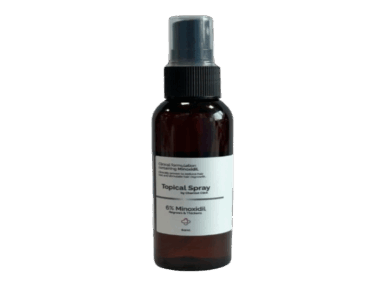


Minoxidil Spray For Hair Loss (Topical) 60ml to 360ml
from
£26.92
 Extra strength (prescription only) version
  Works within 3-6 months
Low side effect profile
Works within 3-6 months
Low side effect profile  4.7*+ user rating
Delivered discreetly
4.7*+ user rating
Delivered discreetly Minoxidil Spray For Hair Loss (Topical) 60ml to 360ml
Buy minoxidil online
You can buy minoxidil topical spray by completing an online questionnaire, which is assessed by one of our inhouse pharmacists. If suitable, you will be offered treatment.
Minoxidil Spray For Hair Loss (Topical) Prices
| Name & Dosage | x1 x60ml Spray | x2 x60ml Spray | x3 x60ml Spray | x4 x60ml Spray | x5 x60ml Spray | x6 x60ml Spray |
|---|---|---|---|---|---|---|
| Minoxidil Spray For Hair Loss (Topical) 6% Topical Solution x60ml Spray |
£26.92 | £53.28 | £79.08 | £104.32 | £128.99 | £153.12 |
Summary For Minoxidil Spray For Hair Loss (Topical)
| Medication Class | Vasodilator |
|---|---|
| Mechanism of action | Promotes blood flow to hair follicles resulting in growth |
| Active ingredient | Minoxidil |
| Strength | 6% |
| Effective within | 3-6 months |
| Dosage Instructions | 6 sprays to be used twice daily |
| Manufacturer | UK laboratories (NHS approved) |
| Use with alcohol | No known interaction |
About Minoxidil 6% topical solution
What is topical minoxidil?
Minoxidil hair spray helps to treat male pattern baldness. It encourages hair regrowth and helps to prevent further hair loss. It was first used as a medication to treat high blood pressure, where its effects on hair regrowth were discovered as a side effect of treatment.
How does it work?
Minoxidil belongs to a class of drugs known as vasodilators. This means that it works to widen blood vessels. Whilst minoxidil’s mechanism of action is not fully understood, it is thought that widening of blood vessels in the scalp, helps to deliver oxygen and nutrients to hair follicles. This helps to stimulate growth and reactivate follicles that are not producing hair.
It is also thought that minoxidil stimulates hair to move from the resting phase (where hair does not grow), to the growth phase. This will not only help to promote hair growth but can also help to increase the overall thickness of hair.
Oral vs topical minoxidil
Minoxidil comes as a topical solution/foam applied to the scalp or a low-dose oral tablet taken once daily. Both can help stimulate hair growth, but they suit different people.
How they work
- Topical: Acts locally on the scalp to boost blood flow to hair follicles.
- Oral: Works systemically to support hair growth from within, often used when topical treatments are ineffective or poorly tolerated.
Effectiveness
Both forms can work, but oral minoxidil may give stronger, more consistent results in some people, especially non-responders to topical minoxidil.
Ease of use
- Topical: Needs regular application; can irritate the scalp or affect styling.
- Oral: One tablet daily; simpler for those who struggle with topical routines.
Side effects
- Topical: Scalp dryness, irritation, occasional facial hair.
- Oral: Increased body hair, fluid retention, and blood pressure changes. Requires medical supervision.
Regaine vs topical minoxidil
Regaine contains minoxidil 5% and Chemist Click’s minoxidil hair spray contains minoxidil 6%.
Minoxidil ingredients
Active ingredient: Minoxidil 6%
Inactive ingredients: Glycerol, Water, Sulphuric Acid and Methylated Spirit
Minoxidil Spray Dosage Instructions
How to apply minoxidil spray
6 sprays to be used twice daily.
Side effects of topical minoxidil
Most of the side effects of minoxidil relate to the oral tablets. It is unlikely that the topical formulation will be absorbed through the skin to cause side effects.
There is a small chance of side effects with topical minoxidil, and these usually relate to issues surrounding the hair and scalp.
The most common side effects of topical minoxidil include:
- Irritation at the site of application
- Itchiness of the scalp
- Burning of the scalp
- Temporary increase in hair loss (minoxidil shedding)
- Change in hair texture
- Change in hair colour
Does topical minoxidil cause heart problems?
Topical minoxidil is absorbed through the skin in very small amounts, so it rarely causes heart-related side effects. For most people, it does not lead to heart problems. However, a small number of users may experience mild increases in heart rate, palpitations, or dizziness, usually when too much is applied or if the scalp is damaged, increasing absorption.
Minoxidil Spray Warnings
This medicine is suitable for most people, however, not everyone can use it. If you are in any doubt, talk to your doctor or pharmacist.
Do not use this medicine if:
- You are allergic to minoxidil or any of the other ingredients contained in this medicine (listed in section 6)
- You are female
- You are under the age of 18 or over the age of 65
- You have hair loss caused by medication
- You have total baldness or complete loss of all body hair
- The cause of your hair loss is unknown, uneven, or it is sudden and unexpected
- You have high blood pressure (treated or untreated)
- You suffer from a heart condition(s), including but not limited to abnormal heart rhythms or rates, angina or chest pains and/or circulation disorders, high blood pressure
- You have any condition that affects your scalp, including sunburn and psoriasis
- You have a shaven scalp
- You are using creams, ointments or lotions used to treat scalp conditions
- You have any kind of dressing or bandage on your scalp
- You are at all unsure whether your scalp is normal and healthy
Talk to your doctor or pharmacist if:
- You are not sure where your scalp is normal and healthy
- You are taking other medicines, including certain blood pressure medicines called ‘vasodilators’ e.g. hydralazine. There is a potential that minoxidil can interact with these medicines and increase their effect
- There may be underlying causes of hair loss, such as hormonal issues or mal-nutrition
Minoxidil Spray Interactions
Do not use this product at the same time as applying other topical treatments to the scalp. This includes, but it not limited to corticosteroids, retinoids or dithranol.
There is limited information on the interactions between topical minoxidil and other medication. Although not clinically proven, it is theoretically possible that the absorption of minoxidil into the bloodstream may cause a drop in blood pressure. Patients at risk include those with a history of low blood pressure, the elderly, and those taking medication to lower blood pressure.
Frequently Asked Questions
Minoxidil spray is a proven treatment for hair loss in men. It is most effective in:
- Younger men
- Those that have been displaying symptoms of male pattern baldness for a short period of time
- Small areas of baldness
- Those that use treatment consistently
A study conducted an America found that topical minoxidil had a positive outcome in 84% of men who were experiencing hair loss.
Another study concluded that topical minoxidil was significantly more effective in regrowing hair, when compared to a placebo.
Yes, topical minoxidil is considered safe for most people and has been used for decades to treat hair loss. Because only a small amount is absorbed into the bloodstream, side effects are usually mild and limited to the scalp, such as dryness, irritation, or itching.
Yes, there is no evidence to suggest that minoxidil poses any long-term health risks.
Yes, this happens because minoxidil is moving hair out of the resting phase, causing it to fall out at a faster rate than usual. This is to make way for newer, thicker, and healthier strands of hair. It is a sign that minoxidil is working. Shedding usually starts anywhere between 2-8 weeks into treatment and lasts for around 8 weeks.
Stopping minoxidil spray will reverse any positive results you have experienced from treatment. You cannot stop using minoxidil without losing hair that has been regrown.
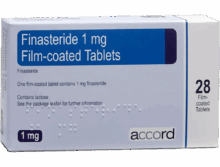
It is safe and common practice to use both minoxidil and finasteride together. Minoxidil works by helping to increase blood flow to the scalp, whilst finasteride works by blocking the conversion of testosterone to dihydrotestosterone (a hormone which shrinks hair follicles). Both treatments work together to complement each other, providing better results than using a single treatment.
Research looking at minoxidil for beard growth is limited. In theory, it will work to promote beard growth, as there are hair follicles on your face. Case studies within this area are limited to social media, and we do not recommend using minoxidil for beard growth. The skin on your face is thinner and more delicate, to the skin on your scalp. This may increase the chances of skin irritation and localised side effects. The same applies to eyebrows and other areas of your body, other than your scalp.
Yes, most clinics will recommend using minoxidil hair spray after a hair transplant to minimise shock hair loss and preserve the new head of hair. It may even help to regrow more hair after the surgery. Most clinics will advise that you wait 3-4 weeks post-transplant, before using minoxidil. However, you should check with your clinic before starting treatment.
Yes, in theory, the treatment will work to treat frontal baldness. However, research is limited in this area.
Yes, however, we only supply minoxidil for the treatment of male pattern baldness.
Written and clinically reviewed by our pharmacists


Minoxidil Spray For Hair Loss (Topical) Reviews
Product rated 5/5


This stuff is magic,, been using for 8 months now Went from having thinn receding hair to a thick and full head of hair. Unbelievable!
By Anonymous (via Reviews.io)Customer reviews reflect individual experiences and are not medical advice.






Other options include:
Our Awards & Certifications
Our team of experienced pharmacists and healthcare professionals are dedicated to providing the highest level of care and service to every customer, ensuring that they receive the best possible healthcare experience.

Our Clients Say:
An excellent organisation. Our malaria tablets were easy to order, came with clear instructions and fast delivery. A good price too. We will definitely use this company again for medication.
By Jenny T.
Quick and easy process, good communication. I received a call from them just to check my regular medication.
By Linda H.
A very prompt, professional and discreet service which assists with daily living. Loyalty is rewarded when re-ordering and orders arrive on time.
By Anthony J.
So easy to browse, choose and order what you want. Great prices and fast delivery. Excellent company to deal with.
By Graeme H.
To be fair, I've checked out other pharmacy sites and done the comparisons on price. I'm very happy to purchase from Chemist Click. Delivery great too, even the cheapest option.
By Stephen L.
Always use Chemist Click, their service is second to none, very quick delivery on my purchases and never let me down, highly recommended.
By Ian H.
I am very happy with the speedy delivery, the professionalism and the value for money.
By Roy K.
Chemist Click is extremely easy to use and also user friendly. You get what you need without any hassle or hesitation. Delivery is very quick and delivered as stated. This is a great service for anyone of all ages and abilities.
By Mark P.Related articles...


