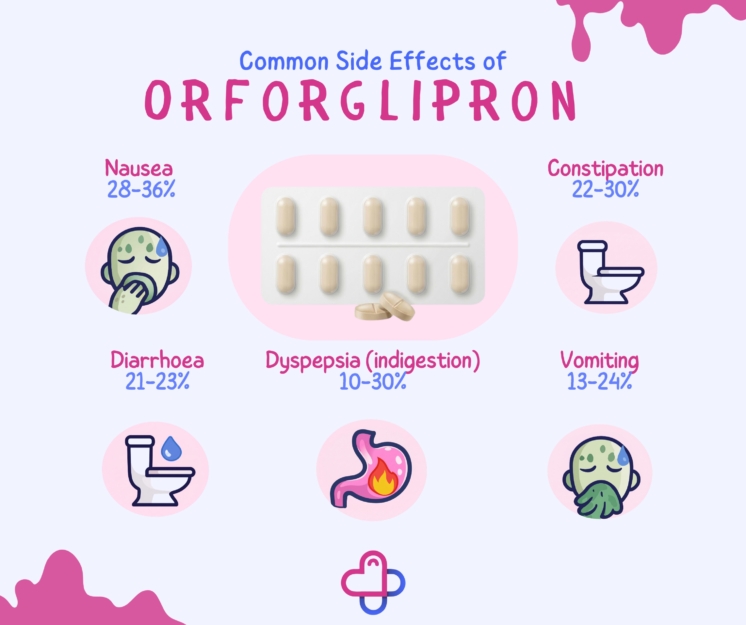
The most common side effects of orforglipron are nausea, constipation, diarrhoea, vomiting, indigestion, abdominal pain, headache, bloating, tiredness, belching, heartburn, gas and hair loss.
Most side effects are mild to moderate and affect the digestive system. They are more likely to happen when you first start treatment or after a dose increase.
Orforglipron can also cause serious side effects, including pancreatitis, gallbladder problems, dehydration leading to kidney problems, low blood sugar in some people with diabetes, severe stomach problems, allergic reactions and changes in vision in people with type 2 diabetes.
You should seek urgent medical help if you develop severe, persistent abdominal pain, especially if the pain spreads to your back or happens with nausea or vomiting.
Orforglipron is an oral GLP-1 tablet being developed for weight management and type 2 diabetes. It works by copying the action of GLP-1, a natural hormone involved in appetite, fullness, digestion and blood sugar regulation.
Unlike injectable GLP-1 medicines such as Wegovy and Mounjaro, orforglipron is taken as a tablet. In the United States, it has been approved under the brand name Foundayo for chronic weight management in adults with obesity, or some adults with overweight who also have weight-related health problems.
At the time of writing, orforglipron is not currently a licensed UK weight loss medicine. This article discusses side effects based on available clinical trial data, FDA information and manufacturer safety information. UK product information may differ if orforglipron is approved by the MHRA in the future.
Further reading: How does orforglipron work?
The most common side effects of orforglipron are gastrointestinal. This means they affect the stomach and digestive system.
Commonly reported side effects include:
These side effects can happen because GLP-1 medicines slow stomach emptying, reduce appetite and affect digestion. This is also part of how they help with weight loss.
For many people, digestive side effects are worse at the start of treatment and after dose increases. They may improve after the body adjusts.
Most orforglipron side effects are not serious, but some symptoms need urgent medical attention.
Pancreatitis means inflammation of the pancreas. This is a serious potential side effect of GLP-1 medicines.
Seek urgent medical help if you develop severe, persistent abdominal pain, especially if the pain spreads to your back or happens with nausea or vomiting.
If pancreatitis is suspected, treatment should usually be stopped while you are assessed. If pancreatitis is confirmed, GLP-1 treatment should not usually be restarted unless a specialist advises otherwise.
Orforglipron can cause stomach problems, and in some people these may be severe.
Speak to a clinician if you have stomach pain, nausea, vomiting, reflux, bloating or diarrhoea that is severe, persistent or getting worse.
Nausea, vomiting and diarrhoea can cause dehydration. Dehydration can put strain on the kidneys, especially in people who already have kidney problems or who take medicines that affect fluid balance.
Seek medical advice if you:
Orforglipron may increase the risk of low blood sugar if it is used with diabetes medicines that can also lower blood sugar, such as insulin or sulfonylureas.
Symptoms of low blood sugar can include:
If you take diabetes medicines, your prescriber may need to adjust your treatment and advise you on blood sugar monitoring.
GLP-1 medicines have been linked with gallbladder problems, including gallstones and inflammation of the gallbladder.
Get medical advice if you develop:
Stop treatment and seek urgent medical help if you develop symptoms of a serious allergic reaction, including:
If you have type 2 diabetes, tell your healthcare professional if you notice changes in your vision during treatment. Changes in blood sugar control can sometimes affect diabetic eye disease.
The MHRA strengthened warnings for GLP-1 receptor agonists and dual GLP-1/GIP receptor agonists in January 2026 because of rare reports of severe acute pancreatitis, including necrotising and fatal cases.
The MHRA advises patients to seek urgent medical attention if they develop severe, persistent abdominal pain that may spread to the back and may be accompanied by nausea or vomiting.
This warning applies to UK-authorised GLP-1 and GLP-1/GIP medicines. Orforglipron is not currently UK-authorised at the time of writing, but the warning is still relevant because orforglipron is a GLP-1 medicine and shares similar class-related safety concerns.
Yes, nausea is one of the most common side effects of orforglipron.
It is usually more likely when starting treatment or increasing the dose of orforglipron. Nausea may improve as your body gets used to the medicine.
To help manage nausea:
Speak to a clinician if nausea is severe, does not improve or stops you eating or drinking properly.
Yes, constipation can happen with orforglipron. GLP-1 medicines can slow digestion, which may make bowel movements less frequent.
To help manage constipation:
Seek medical advice if constipation is severe, painful or does not improve.
Yes, diarrhoea can happen with orforglipron. It may be more likely when starting treatment or after a dose increase.
To help manage diarrhoea:
Speak to a clinician if diarrhoea is severe, persistent, bloody, or happens with dizziness, weakness or signs of dehydration.
Yes, vomiting can occur with orforglipron, especially early in treatment or after dose increases.
If you vomit:
Get urgent medical help if you cannot keep fluids down, feel very weak, pass very little urine or have severe persistent abdominal pain.
Hair loss has been listed among reported side effects of orforglipron.
Hair shedding may also happen during significant weight loss, especially if calorie intake, protein intake or micronutrient intake drops. This type of shedding is often temporary, but it should still be assessed if it is sudden, severe or persistent.
Speak to a clinician if you notice significant hair loss while taking a weight loss medicine.
Orforglipron side effects are often most noticeable when starting treatment or increasing the dose.
For many people, digestive symptoms improve over days to weeks as the body adjusts. However, some people may continue to experience symptoms for longer, especially at higher doses.
Speak to a healthcare professional if side effects:
Seek urgent medical help if you develop:
For mild side effects such as nausea, constipation, reflux or headache, speak to a pharmacist or prescriber if symptoms are persistent, troublesome or do not improve.
Orforglipron is an oral GLP-1 medicine with a side-effect profile that is mainly digestive. The most common side effects include nausea, constipation, diarrhoea, vomiting, indigestion, abdominal pain, headache, bloating, tiredness, belching, heartburn, gas and hair loss.
Most side effects are mild to moderate and may improve as the body adjusts. However, serious side effects can occur, including pancreatitis, gallbladder problems, dehydration, kidney problems, low blood sugar in some people with diabetes and allergic reactions.
If you develop severe persistent abdominal pain, especially if it spreads to your back or happens with nausea or vomiting, seek urgent medical help.
Orforglipron side effects usually start early in treatment, especially when you first start taking it, or when the dose is increased.
Based on clinical studies so far, orforglipron pills may cause side effects that are generally less severe than injectable GLP‑1 medications, especially for nausea and digestive issues. However, these findings are still being studied, and individual experiences can vary.
In clinical studies, people started to see weight loss from orforglipron within a few weeks, with more noticeable results over several months.
Further reading: Orforglipron results
Based on current clinical studies, Orforglipron pills may cause side effects that are generally milder than injectable GLP‑1 medications. However, research is ongoing.
Orforglipron can be taken once daily with or without food. Unlike some oral GLP-1 tablets, it does not need to be taken on an empty stomach.
However, food choices may still affect side effects. Large, greasy or rich meals can make nausea, reflux, bloating and vomiting worse.
Smaller meals, slower eating and avoiding high-fat foods may help reduce digestive symptoms.
Eli Lilly. Foundayo orforglipron indication and safety summary with warnings. https://investor.lilly.com/node/54401/pdf
U.S. Food and Drug Administration. FDA approves orforglipron under the brand name Foundayo. https://investor.lilly.com/news-releases/news-release-details/foundayotm-orforglipron-lillys-new-oral-glp-1-pill-weight-loss
MHRA. GLP-1 receptor agonists and dual GLP-1/GIP receptor agonists: strengthened warnings on acute pancreatitis. https://www.gov.uk/drug-safety-update/glp-1-receptor-agonists-and-dual-glp-1-slash-gip-receptor-agonists-strengthened-warnings-on-acute-pancreatitis-including-necrotising-and-fatal-cases
Clinical trial data from the ATTAIN and ACHIEVE orforglipron programmes. https://www.nejm.org/doi/10.1056/NEJMoa2511774
Manufacturer prescribing and medication guide information for orforglipron. https://www.accessdata.fda.gov/drugsatfda_docs/label/2026/220934Orig1s000lbl.pdf
Whilst all of our content is written and reviewed by healthcare professionals, it is not intended to be substituted for or used as medical advice. If you have any questions or concerns about your health, please speak to your doctor.