Weight loss injections are not automatically better than pills for everyone. The right option depends on the medicine, how effective it is for you, possible side effects, your medical history and which method you find easier to use consistently.

However, some of the most established prescription weight-loss treatments currently available are injections. Medicines such as Wegovy injections and Mounjaro are taken once weekly and can produce substantial weight loss when prescribed appropriately and used alongside dietary and lifestyle changes.

While these medicines are often taken as an injection, oral options can be more appealing if you dislike needles, although tablets may need to be taken every day and some have specific instructions around food and timing.

Here is how the two approaches compare.

What are weight loss injections?

Weight loss injections are prescription medicines administered under the skin. They are designed to support weight management by influencing biological processes involved in appetite and fullness.

Two well-known examples are Wegovy and Mounjaro.

Wegovy contains semaglutide and acts on GLP-1 receptors. Mounjaro contains tirzepatide and acts on both GIP and GLP-1 pathways. Both can reduce appetite and help you feel fuller, making it easier to consume less food.

These medicines are generally taken once a week rather than every day.

They are prescription treatments, so suitability needs to be assessed by an appropriate healthcare professional rather than decided purely on personal preference.

What weight loss pills are available?

“Weight loss pills” is a broad term covering medicines that can work in different ways.

Some established oral treatments do not work like GLP-1 medicines at all. Other newer tablets use GLP-1 pathways similar to those associated with injectable treatments.

This makes it important to compare individual medicines rather than assuming all pills work in the same way.

The availability of newer oral GLP-1 treatments is also changing quickly. If you are researching GLP-1 tablets versus injections, check the current UK licensing status and prescribing information for the specific medicine you are considering.

Are injections more effective than pills?

It depends on which medicines you compare.

Some injectable treatments have produced particularly strong average weight-loss results in clinical trials. Chemist Click’s comparison of current GLP-1 treatments reports that injectable Mounjaro has generally produced greater average weight loss than the oral GLP-1 options it reviews.

That does not mean every injection will always produce better results than every tablet.

Different medicines contain different active ingredients, work through different pathways and have been studied using different doses and trial periods. Individual results also vary.

A percentage quoted from a clinical trial should therefore not be treated as a prediction of exactly how much weight one person will lose.

Injections can be easier to remember

One practical advantage of treatments such as Wegovy and Mounjaro is their dosing schedule.

Both are taken once weekly.

For somebody who already struggles to remember daily medication, having one regular treatment day each week may be easier to manage than taking a tablet every morning.

Some oral GLP-1 medicines also have specific administration requirements. For example, oral Wegovy is taken daily on an empty stomach, while its injectable equivalent is taken once weekly.

Convenience therefore depends on your routine rather than whether a medicine is swallowed or injected.

Pills avoid needles

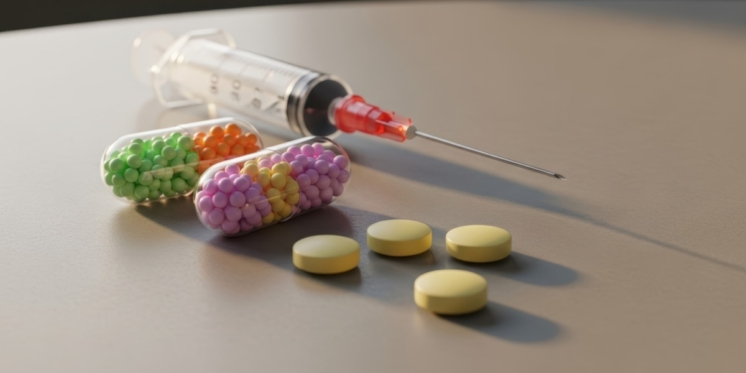
A Syringe with a big needle and some colorful pills on the table.

The clearest advantage of tablets is that no injection is required.

For somebody with a strong fear of needles, this can make an oral medicine much more appealing. Tablets may also feel more familiar if you already take other oral medication.

However, modern weight-loss injections are designed for self-administration using injection devices, and a healthcare professional can explain how the treatment should be used.

The NHS states that tirzepatide is injected once a week and that a doctor or nurse can show patients how to administer it.

If concerns about injecting are the main reason you prefer tablets, discuss them during your consultation rather than ruling out a potentially suitable treatment without further information.

Do injections and pills have different side effects?

Both oral and injectable weight-loss medicines can cause side effects, although the exact risks depend on the medicine.

GLP-1-based treatments commonly cause digestive symptoms. These can include nausea, vomiting, diarrhoea and constipation.

Injectable medicines can additionally cause reactions around the injection site.

Side effects can be more noticeable when starting some treatments or when the dose is increased. This is one reason doses may be increased gradually rather than beginning immediately at the maintenance dose.

You should read the patient information supplied with your medicine and discuss concerns or persistent side effects with an appropriate healthcare professional.

Which is more convenient?

There is no universal winner.

Tablets avoid needles and may be easier to carry or incorporate into an existing medication routine.

Injections can reduce how often you need to remember treatment because popular options such as Wegovy and Mounjaro are administered weekly.

Some tablets also come with stricter instructions. Chemist Click notes that Wegovy tablets need to be taken on an empty stomach, while injectable Wegovy can be taken without the same food restrictions.

Think about which routine you could realistically follow for months rather than which sounds easiest on the first day.

Can you switch between pills and injections?

Sometimes, but you should not switch weight-loss medicines or formulations without advice from your prescriber.

Even when a tablet and injection contain the same active ingredient, they can have different doses and instructions.

Chemist Click’s guidance on switching between Wegovy formulations, for example, explains that the process should take place under prescriber supervision rather than simply replacing one formulation with another yourself.

If your current treatment is difficult to tolerate or does not suit your routine, speak to your prescriber about the available alternatives.

Which treatment is right for you?

The best weight-loss medicine is not necessarily the one producing the largest headline percentage in a study.

Your prescriber needs to consider whether the treatment is appropriate for you.

Factors can include your weight and BMI, existing medical conditions, other medicines, previous weight-management attempts and the potential risks associated with treatment.

Personal preference can also matter. A highly effective medicine is less useful if its dosing routine makes it difficult for you to use correctly.

Prescription weight-loss medicines should also support broader changes rather than replace them. NHS guidance states that medicines such as tirzepatide should be used alongside a balanced, reduced-calorie diet and regular physical activity.

So, are weight loss injections better?

For some people, yes.

Established injectable treatments can offer strong weight-loss results and convenient once-weekly dosing. They may be a good choice for somebody who is comfortable using an injection and has been assessed as suitable for treatment.

Pills have their own advantages, particularly for people who want to avoid needles. Newer oral treatments also mean the difference between tablets and injections is becoming less straightforward than it once was.

Rather than choosing based solely on the method of administration, compare the actual medicines available to you.

For eligible patients considering an injectable weight management treatment, an appropriate consultation can help determine whether an injectable option is suitable based on your health and treatment needs.

Some injectable treatments have produced greater average weight loss than certain oral treatments in clinical studies, but effectiveness depends on the specific medicines being compared. Individual results can also vary considerably.

Wegovy (semaglutide) and Mounjaro (tirzepatide) are established prescription weight-management injections. Both are administered once weekly.

Not necessarily. Safety depends on the specific medicine and the person taking it, not simply whether it comes as a tablet or injection. Both forms can cause side effects and require appropriate prescribing.

Weight-loss injections are administered under the skin using an injection device. Some people may experience discomfort or injection-site reactions, although experiences vary.

Wegovy and Mounjaro are normally administered once weekly. Other injectable medicines can have different schedules, so always follow the instructions for the treatment you have been prescribed.

They can be if you dislike needles, but some tablets need to be taken every day and may have specific instructions around food and timing. Ease of use therefore depends on the particular treatment and your routine.

It may be possible with some treatments, but any change should be discussed with your prescriber. Do not stop one medicine and begin another or change formulations without appropriate guidance.

Prescription weight-management medicines are intended to be used alongside appropriate dietary and lifestyle changes. NHS guidance for treatments such as Mounjaro recommends a balanced, reduced-calorie diet and regular physical activity while using the medicine.

Whilst all of our content is written and reviewed by healthcare professionals, it is not intended to be substituted for or used as medical advice. If you have any questions or concerns about your health, please speak to your doctor.

Share