GLP-1 weight loss medications such as Wegovy and Mounjaro are best known for helping people lose weight by reducing appetite, but some users have also reported a surprising side effect: drinking less alcohol.

While these medicines aren’t licensed to treat alcohol dependence, early research suggests they may reduce alcohol cravings in some people. I

In this article, we explore the science behind the link, what the latest evidence shows, and whether weight loss drugs could play a role in reducing alcohol consumption.

Do weight loss medications stop alcohol cravings?

GLP-based treatments can reduce alcohol cravings for some people – and newer research suggests this effect may be real, not just anecdotal.

While these medications aren’t designed or licensed specifically to treat alcohol use, both patient reports and emerging clinical studies show that people often feel less interested in drinking, have fewer cravings, and may drink less overall.

The reason comes down to how these medications work in the brain:

  • They help regulate appetite by acting on areas that control hunger and fullness, but those same areas are also involved in reward and pleasure.
  • Alcohol, like food, activates this reward system. By dampening that response, the medication may make alcohol feel less appealing or less satisfying.
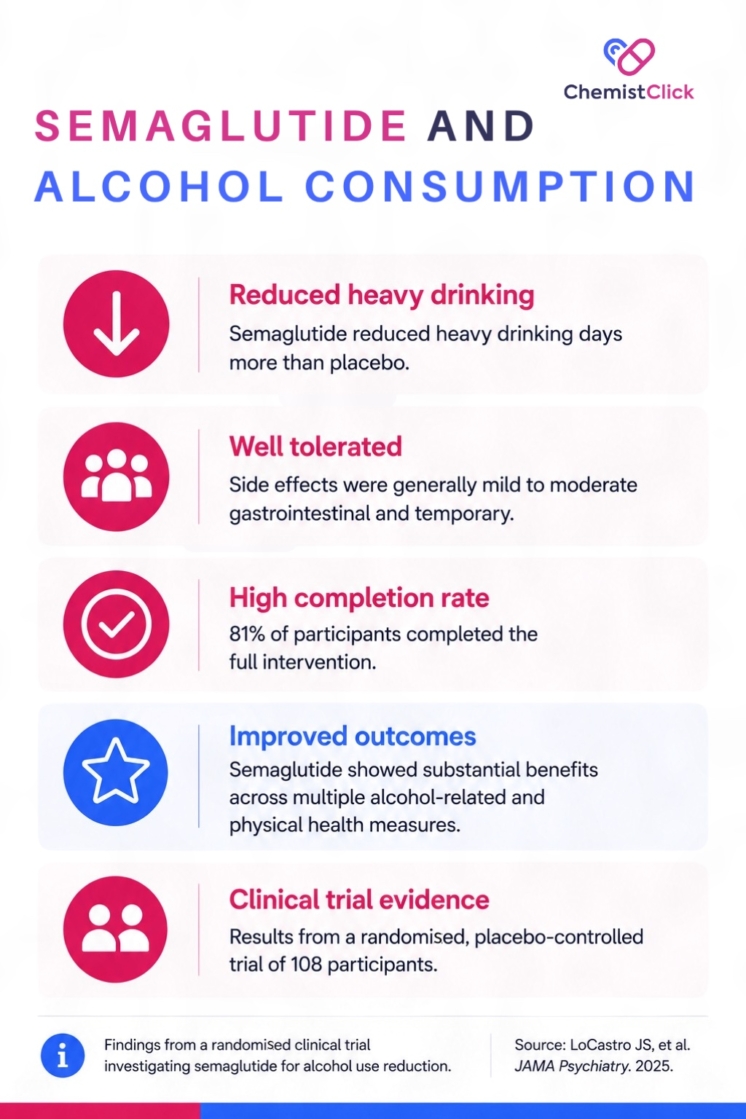
  • A recent study adds weight to this, finding that people taking semaglutide had fewer heavy drinking days and reported reduced cravings compared to those on a placebo.
SEMAGLUTIDE AND ALCOHOL CONSUMPTION INFOGRAPHIC

It’s still early days, and these medications are not currently approved to treat alcohol dependence. But the growing evidence suggests they could play a role in the future – especially alongside other support like therapy.

Can you drink alcohol on weight loss injections?

Yes, you can usually drink alcohol while using weight loss injections, but it’s best to do so in moderation and with a bit of caution.

Medications like semaglutide or tirzepatide don’t directly interact with alcohol, so there’s no strict rule that you must avoid it completely. However, both alcohol and these treatments can affect your body in similar ways, particularly when it comes to blood sugar levels, appetite, and digestion.

For example:

  • Weight loss injections can slow how quickly your stomach empties, which may already leave you feeling full or slightly nauseous.
  • Alcohol can make these side effects feel worse, especially early on in treatment.
  • It can also increase the risk of low blood sugar (particularly if you’re eating less), and because alcohol is high in calories, it may slow down your weight loss progress if consumed regularly.

Another thing to be aware of is that many people find their tolerance changes while on these medications – meaning you might feel the effects of alcohol more quickly or need less than usual.

A sensible approach is to start with small amounts, see how your body responds, and avoid drinking on an empty stomach. If you have any underlying health conditions or concerns, it’s always worth checking in with a healthcare professional for personalised advice.

Are hangovers worse on weight loss drugs?

Hangovers can feel worse on weight loss medications for some people, but it’s not guaranteed, and it varies from person to person. There isn’t strong research yet on this specifically, but the way these medications work can make some common hangover symptoms more noticeable.

Here’s why hangovers might feel worse:

  • You may get dehydrated more easily
    Weight loss medications can reduce appetite and thirst, so you might drink less fluid overall. Alcohol is also dehydrating, which can make headaches, dizziness and fatigue feel more intense.
  • Nausea can be amplified
    GLP-based treatments commonly cause nausea, especially when you first start. Alcohol can irritate the stomach too, so the combination may make nausea or vomiting more likely.
  • Slower stomach emptying
    These medications slow how quickly food leaves your stomach. This can sometimes make you feel bloated or queasy after drinking and may prolong discomfort the next day.
  • Lower tolerance to alcohol
    Some people find they feel the effects of alcohol more quickly on these medications, meaning you might feel rough after drinking less than usual.
  • Blood sugar dips
    Alcohol can affect blood sugar levels, and when combined with reduced food intake, this may contribute to shakiness, fatigue, or feeling unwell the next day.

Frequently Asked Questions

GLP-based medications can reduce alcohol cravings for some people, but they don’t stop them completely and aren’t approved as a treatment for alcohol use.

Yes, you can drink alcohol while taking Mounjaro, but it’s best to do so in moderation. Alcohol can worsen side effects like nausea and dizziness, may affect blood sugar levels, and can slow down weight loss progress.

These medications aren’t licensed treatments for alcohol addiction, but early research suggests they may reduce cravings in some people. However, the evidence is still developing, and they shouldn’t be used as a substitute for proven alcohol addiction treatments such as counselling or specialist support.

There isn’t a ‘best’ GLP-1 for alcohol cravings right now. Medications like semaglutide and tirzepatide have shown early promise in reducing alcohol cravings, likely because they act on the brain’s reward pathways. However, this research is still in the early stages, and none of these drugs are licensed specifically to treat alcohol use disorder.


  1. The Lancet (2026). Once-weekly semaglutide versus placebo in patients with alcohol use disorder and comorbid obesity. Retrieved 01.07.26, from: https://www.thelancet.com/journals/lancet/article/PIIS0140-6736(26)00305-3/fulltext

Whilst all of our content is written and reviewed by healthcare professionals, it is not intended to be substituted for or used as medical advice. If you have any questions or concerns about your health, please speak to your doctor.

Share